
Last updated November 16, 2026
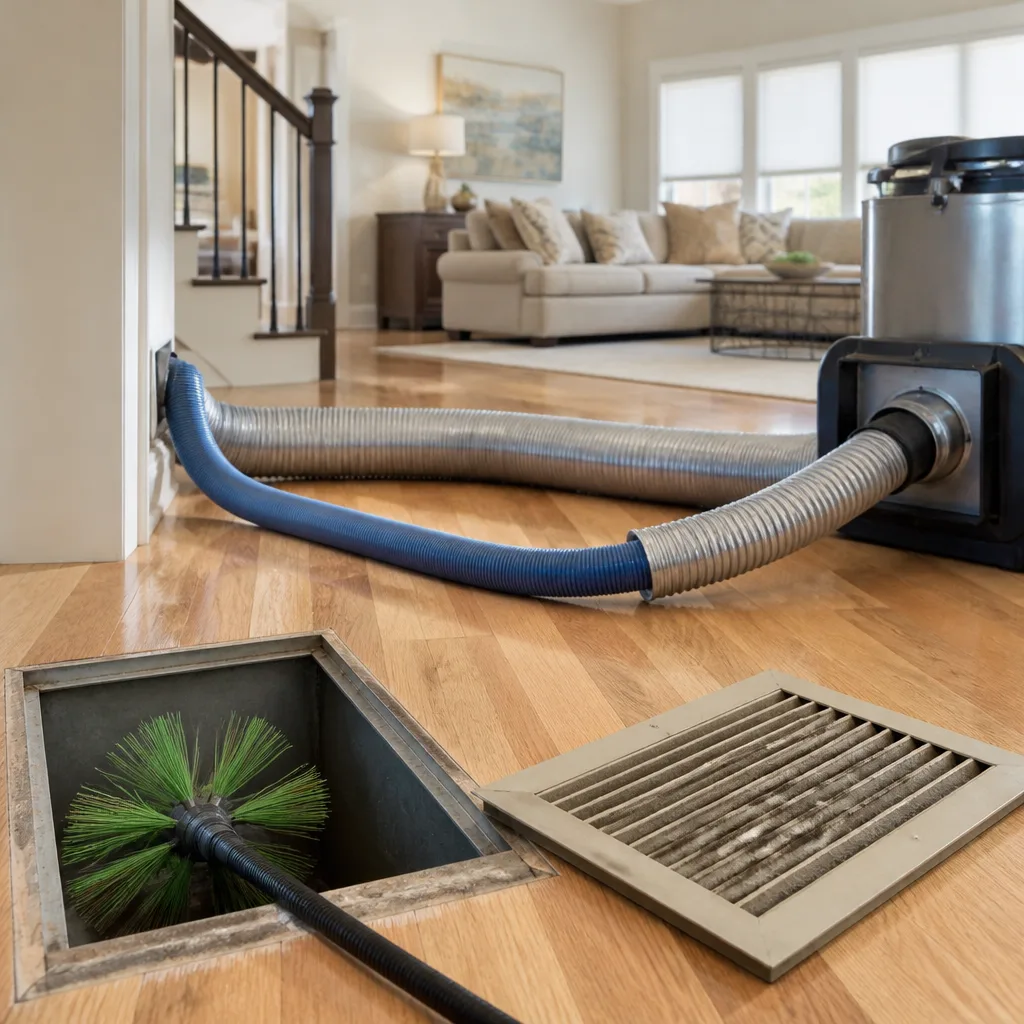 Whole-home duct cleaning
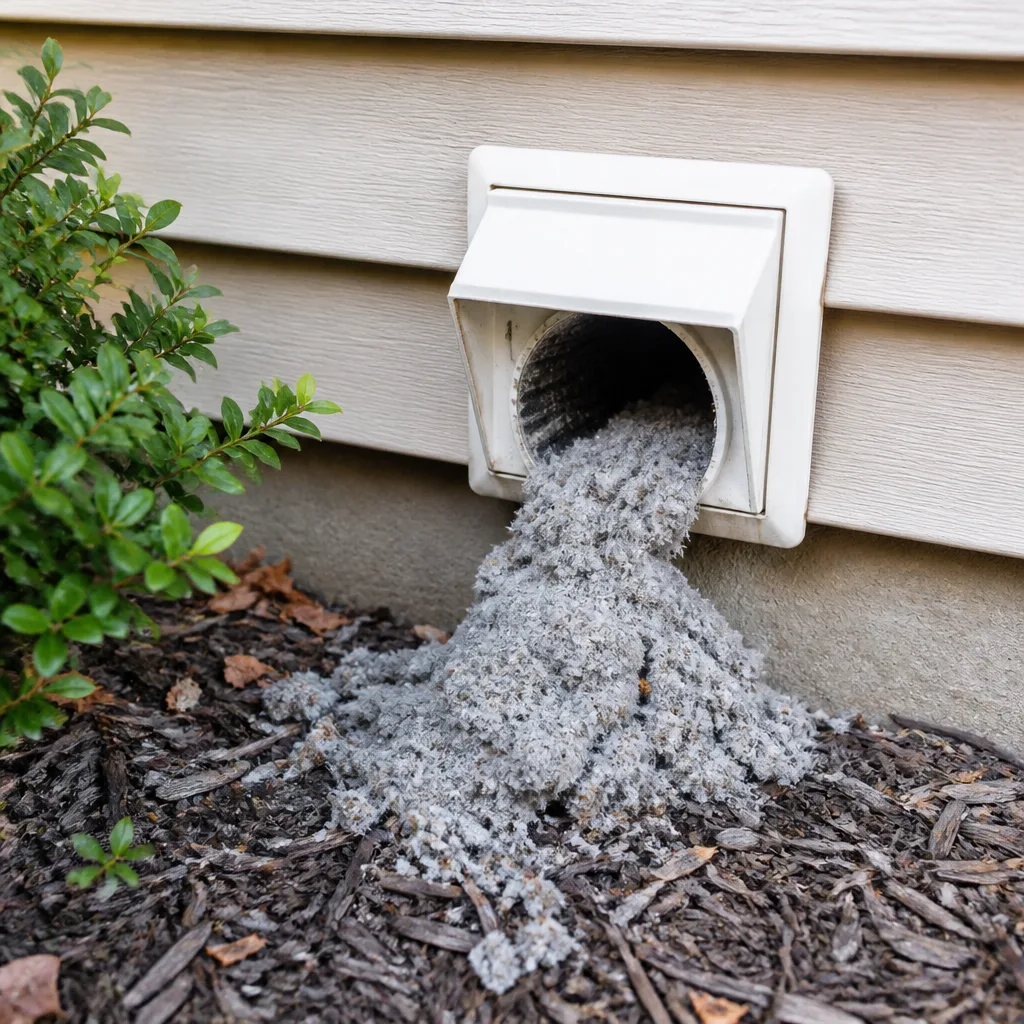 Dryer vent cleaning
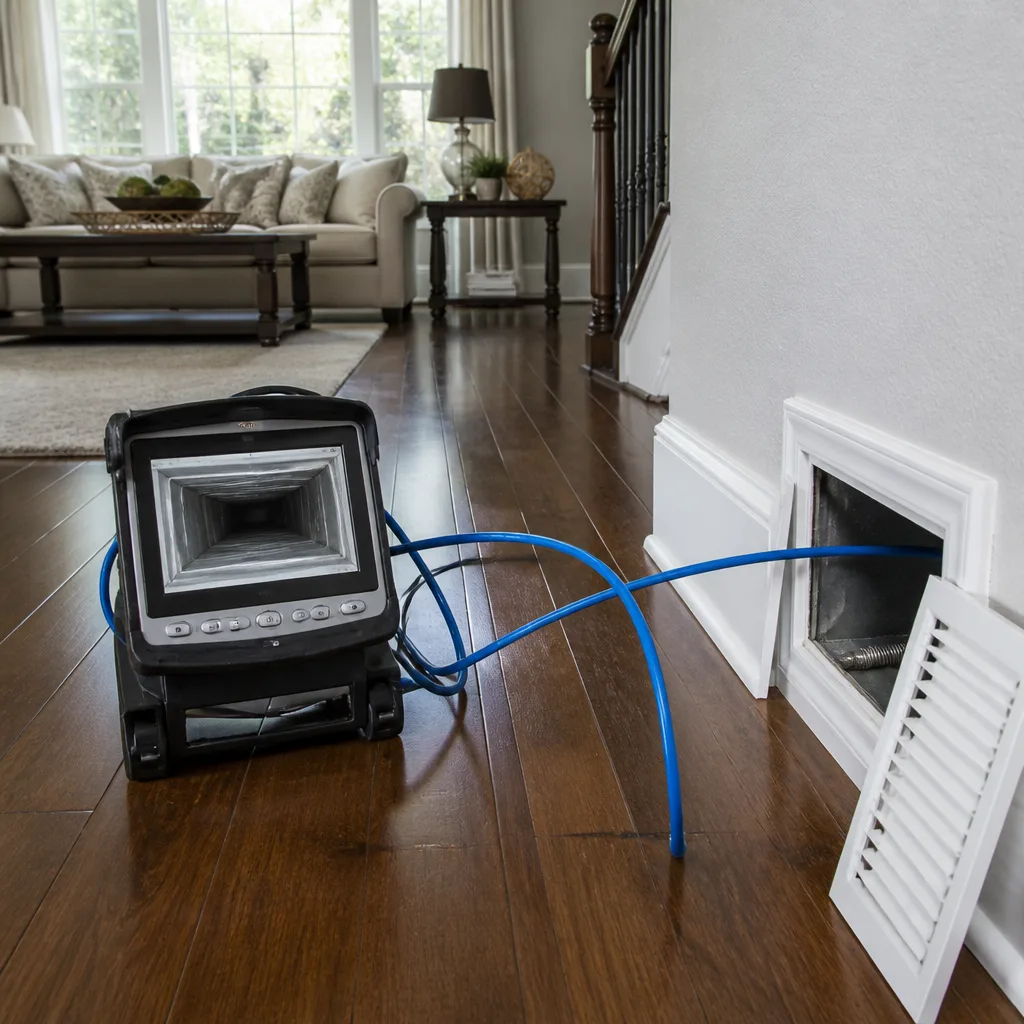 Camera inspection
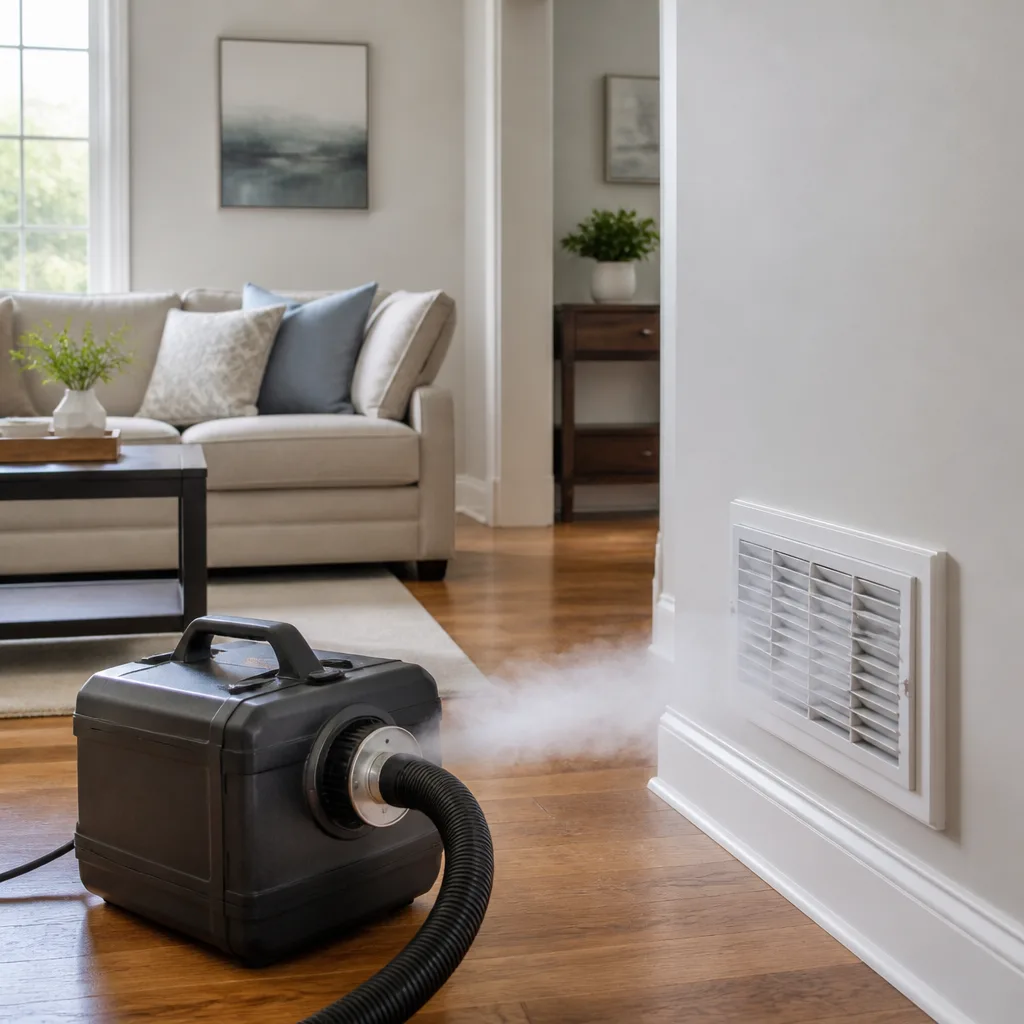 Sanitizing & deodorizing
Whole-system duct and dryer vent check with before-and-after photos - you see exactly what came out of your vents
That "$99 whole-house special" is a bait ad - the real number appears once they are in your hallway, or the "clean" is a shop-vac at the register. We photograph the inside of your ducts before and after instead.
Air Duct Cleaning Troubleshooting in Waterbury: Common Problems and How to Fix Them
If one room in your house is always 5°F colder than the rest, your thermostat isn’t lying. Your duct system is. We run into this constantly in Waterbury: a homeowner is convinced the furnace is failing, the AC is undersized, or the whole system needs replacing, when the real story is happening behind the walls in the ductwork itself. Airflow that gets choked, sealed poorly, or lined with deteriorating material shows up as temperature swings, whistling registers, and dust that settles hours after you vacuum. This guide walks you through reading those symptoms accurately, doing a basic visual check at your registers, and knowing which problems a professional cleaning solves and which ones need actual duct repair. You’ll save yourself from paying for the wrong fix.
Quick Answer
Most duct problems in Waterbury come down to one of four causes: accumulated dirt restricting airflow, disconnected or leaking duct sections, deteriorated flex duct or fiberglass duct board common in mid-century homes, or a contaminated system pulling debris back into living spaces. A basic visual inspection at your accessible registers tells you which category you’re facing. Cleaning fixes dirt and contamination, but it won’t fix a crushed flex run or a disconnected joint. Those need physical repair. Knowing the difference before you book anything is the whole point of this guide.
Styles & brands we work with
- Whole-home duct cleaning
- Dryer vent cleaning
- Camera inspection
- Sanitizing & deodorizing
Table of Contents
- What your symptoms actually mean
- How to inspect your own registers
- Flex duct and duct board in older Waterbury homes
- Cleaning problems vs. repair problems
- Why shop-vac cleaning can make things worse
- When your dryer vent is part of the problem
- Common mistakes to avoid
- When to call a professional
What Your Symptoms Actually Mean
Airflow, temperature, and air quality complaints are duct symptoms more often than equipment symptoms. The tricky part is that they wear the costume of an HVAC failure. We tell homeowners in Waterbury to start by mapping the complaint to the duct cause before touching a thermostat.
- One room always hot or cold. Usually a restricted or leaking run serving that room. The duct may be crushed, kinked, or disconnected at a joint, dumping conditioned air into a wall cavity instead of the room.
- Whistling or roaring at one register. High static pressure through a small opening. Often the flex duct feeding it is undersized, partially collapsed, or pinched against a joist.
- Musty or dusty smell when the system kicks on. The ducts themselves are carrying the smell: microbial growth on damp surfaces inside the duct, or a heavy dust load getting stirred on every cycle.
- Dust settling within hours of cleaning. The system is pulling dust from a contaminated source, sometimes a poorly sealed return sealed to a dirty crawl space or attic.
- Weak flow at every register. Restricted return path, a major leak, or a system-wide dirt load, not necessarily a failing blower.
Fiberglass duct board and flex duct are where duct symptoms most often originate in older Waterbury housing. Both materials are common in mid-century builds throughout neighborhoods like Waterbury, and both deteriorate with age.
How to Inspect Your Own Registers
A fifteen-minute walkthrough of your accessible registers and return grilles gives you more information than most people expect. You’re not diagnosing like a technician yet. You’re collecting the facts a technician will need. Follow these steps:
- Pop off each register cover. Look inside the boot (the box behind the grille) with a flashlight. A light gray film is normal. Visible dust clumps, fibers, or dark growth on the walls means a full cleaning is overdue.
- Shine a light down the duct run. Check for torn flex duct liner, collapsed sections, or disconnected joints. If you can see daylight through the duct, it’s leaking or disconnected.
- Run a tissue test. Hold a tissue near the register with the system on. If it barely flutters, flow is weak. If it gets sucked toward the register, the return is pulling air from somewhere it shouldn’t.
- Inspect every return grille. A heavily clogged filter at one return chokes flow to the whole system. Check the filter and the grille cavity for debris.
- Photograph anything odd. Torn liner, moisture stains, a crushed flex run, an unsealed joint. The photos will be useful when a technician quotes the work.
If any of your findings involve actual moisture inside the duct, stop and call a professional. Wet duct systems are a different problem than dirty duct systems, and cleaning before drying makes it worse.
Flex Duct and Duct Board in Older Waterbury Homes
Waterbury’s mid-century housing stock introduces duct problems you won’t see in newer builds. Flex duct was the go-to material in that era, and it has a finite lifespan. The inner liner degrades, sheds, and turns into a dust source that feeds the entire system. Fiberglass duct board gets brittle, sheds fibers at the joints, and can hold moisture in a way sheet metal never does.
What this means for you:
- Deteriorated flex liner is a repair job, not a cleaning job. No amount of cleaning fixes a duct that’s shredding from the inside. The run needs replacement.
- Duct board shedding at the joints typically needs to be sealed or replaced. Cleaning alone just dislodges more fibers.
- Flex duct sagging across a span gets kinked, restricts flow, and can be re-supported or replaced. Cleaning a sagged duct is fine, but it won’t restore the flow.
When we run into deteriorated flex or duct board, we handle the repair as a separate scope, not a cleaning upsell. Duct repair is its own service for us. A homeowner gets a straight answer about what’s a cleaning target and what’s a replacement target. If you’re not sure whether your ducts are structurally sound, that’s the moment to bring in a specialist. This is one of the reasons people call us through the main duct cleaning Waterbury service line rather than a general HVAC company. Duct work is a different trade from duct diagnosis.
Cleaning Problems vs. Repair Problems
The most expensive mistake homeowners make is paying for a cleaning that can’t solve the symptom they called about. Here’s the split we use on the job.
- Problems cleaning fixes: accumulated dust loads at registers and returns; microbial growth on duct walls from a past moisture event that’s been resolved; construction dust left in the system after a renovation; pet dander and light debris carried by the system.
- Problems cleaning won’t fix: any disconnected or crushed duct run; deteriorated flex liner shedding fibers; sagged flex duct that restricts flow; leaks at joints or boots; oversized returns sealed to a contaminated space; a blower failure or failing equipment.
- Problems that need both: a system that’s both contaminated and leaking. In that case we clean first, repair the leaks, and verify the result. Doing it the other way around lets air filtration problems hide inside a freshly sealed system.
If your problem is a duct leak, cleaning will make the leak more visible but won’t stop the loss of conditioned air. If your problem is dust stirring into the living space every cycle, cleaning helps, but a poorly sealed return will let the dust come right back. Ask any provider upfront: is my problem a cleaning problem or a repair problem? A specialist will answer honestly. A general contractor who cleans ducts as a sideline may not have the diagnostic skill or the specialty equipment to give you that answer.
Why Shop-Vac Cleaning Can Make Things Worse
We’ve seen equipment choice make the difference between a solved problem and a bigger mess. A shop vac at a register pulls debris out of the immediate boot. It doesn’t reach the long horizontal runs, the trunk line, or the plenums where most of the debris actually accumulates. Worse, the agitation from a small vacuum can dislodge accumulated debris into an already restricted run, worsening airflow at the far registers.
Professional-grade equipment works differently. The Rotobrush system drives a rotating brush through the duct line with a high-CFM vacuum pulling back, so the debris leaves the system in the same pass the brush breaks it up. Nikro vacuum equipment provides the sustained vacuum and HEPA containment that consumer machines don’t. Abatement Technologies air-filtration equipment lets a proper negative-pressure setup run during the work, so the dust pulled from the ducts doesn’t end up in your living room.
There’s also a containment question most homeowners never think about. A cleaning without containment pushes debris into the air. A cleaning with containment removes it. If a provider shows up with consumer equipment and no containment rig, you’re not getting the same service, even if the price looks similar. We mention this because “professional-grade equipment, not consumer shortcuts” isn’t a marketing line. It’s the difference between solving the problem and redistributing it.
When Your Dryer Vent Is Part of the Problem
A dryer that takes two cycles to dry a normal load has a duct problem, not a dryer problem. The vent behind the dryer is a duct, and it accumulates lint the same way air ducts hold dust. When lint builds up, airflow drops, drying time climbs, and the dryer’s heat stays trapped where it doesn’t belong. That last point is a safety issue, not just a convenience issue.
Recognize the pattern:
- Clothes take longer than one cycle to dry, especially on cold days.
- The dryer feels hot to the touch after a cycle.
- The exterior vent flap doesn’t open fully, or it flutters weakly.
- Lint builds up around the dryer, not just in the trap.
Dryer vent work is one of the three core things we do, and it’s a different scope from air duct cleaning. It’s worth reading our dryer vent cleaning page before you call if you’re not sure which problem you’re facing. If you live in Waterbury and your dryer is taking two cycles, don’t wait. That’s a vent configuration issue we can check in the same visit as a duct cleaning.
Common Mistakes to Avoid
- Treating the symptom instead of the cause. Buying a bigger HVAC unit for what’s actually a restricted duct is the most expensive mistake we see. Have the ducts checked before you replace equipment.
- Hiring a generalist who cleans ducts on the side. Duct diagnosis requires specific tools and specific training. General HVAC companies that “also clean ducts” often have neither the specialty equipment nor the diagnostic skill to tell you why the flow is weak.
- Accepting a price with no scope in writing. Any estimate should list exactly what gets cleaned, what gets repaired, and which equipment is used. If the quote is one line and one number, walk away.
- Skipping containment because it costs a little more. A cleaning without proper negative-pressure containment just puts your duct dust back into your living room. Abatement Technologies equipment exists for this reason.
- Ignoring flex duct deterioration because the ducts “look fine”. In Waterbury’s mid-century homes, the flex liner often fails from the inside first. A surface inspection misses it. Look for fibers at the register boot.
- Never cleaning the dryer vent. Lint buildup in a neglected dryer vent is one of the most common preventable hazards in a home. It’s a short job and worth scheduling.
- Booking a cleaning for a repair problem. If the symptom is a crushed run or a disconnected joint, cleaning won’t fix it. A specialist tells you that. A generalist might still book the cleaning.
When to Call a Professional
Some problems are worth a professional diagnosis even if the eventual answer is “wait another year.” Call us if your ducts show any of these signs: visible debris or microbial growth at more than one register; a musty smell every time the system cycles; weak airflow at two or more registers; a room that’s more than a few degrees off the rest of the house; flex duct liner shedding fibers at the boots; a dryer taking more than one cycle; moisture inside any duct run. If you’re not sure, a free estimate and inspection is the fastest way to know.
Duct Cleaning Waterbury offers free estimates in Waterbury. Call (844) 619-2446. A specialist will walk the system, tell you which problems are cleaning problems and which are repair problems, and give you a written estimate before any work begins.
See the difference
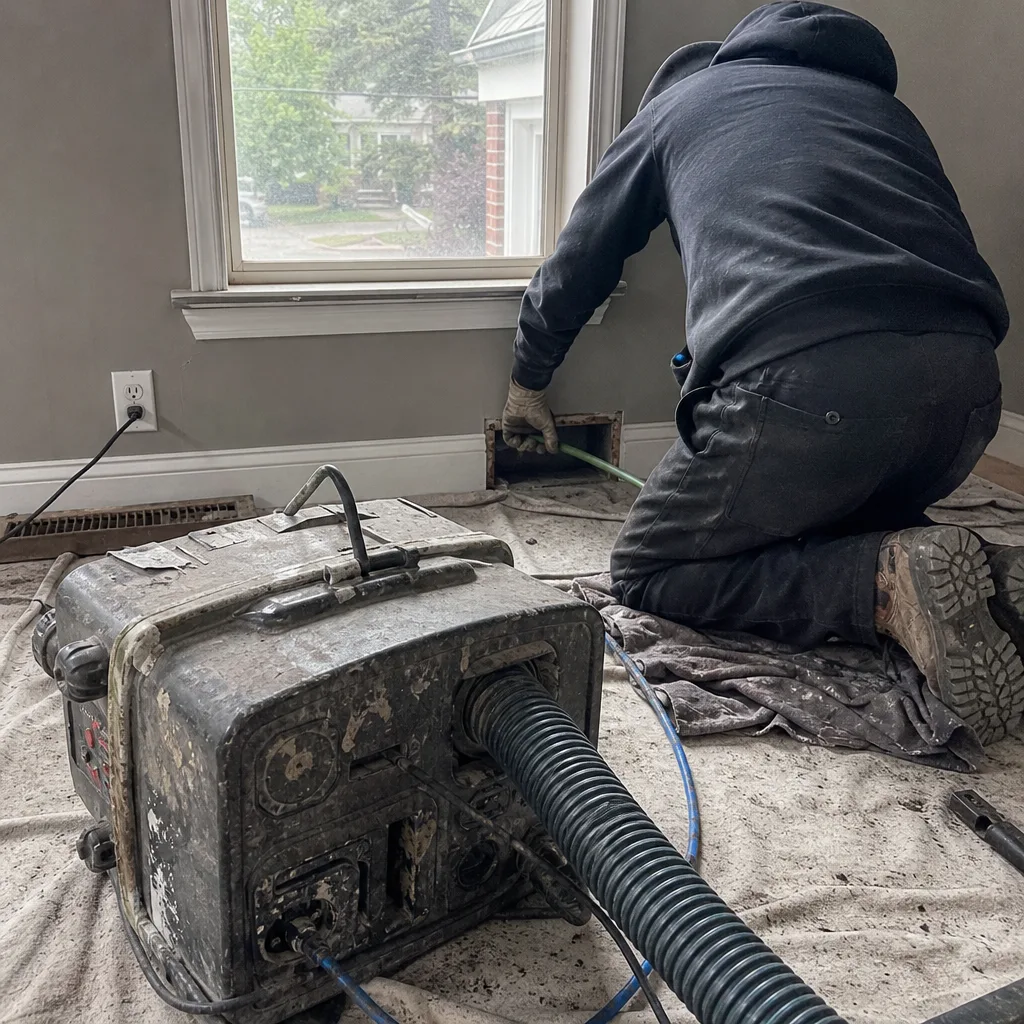 Before
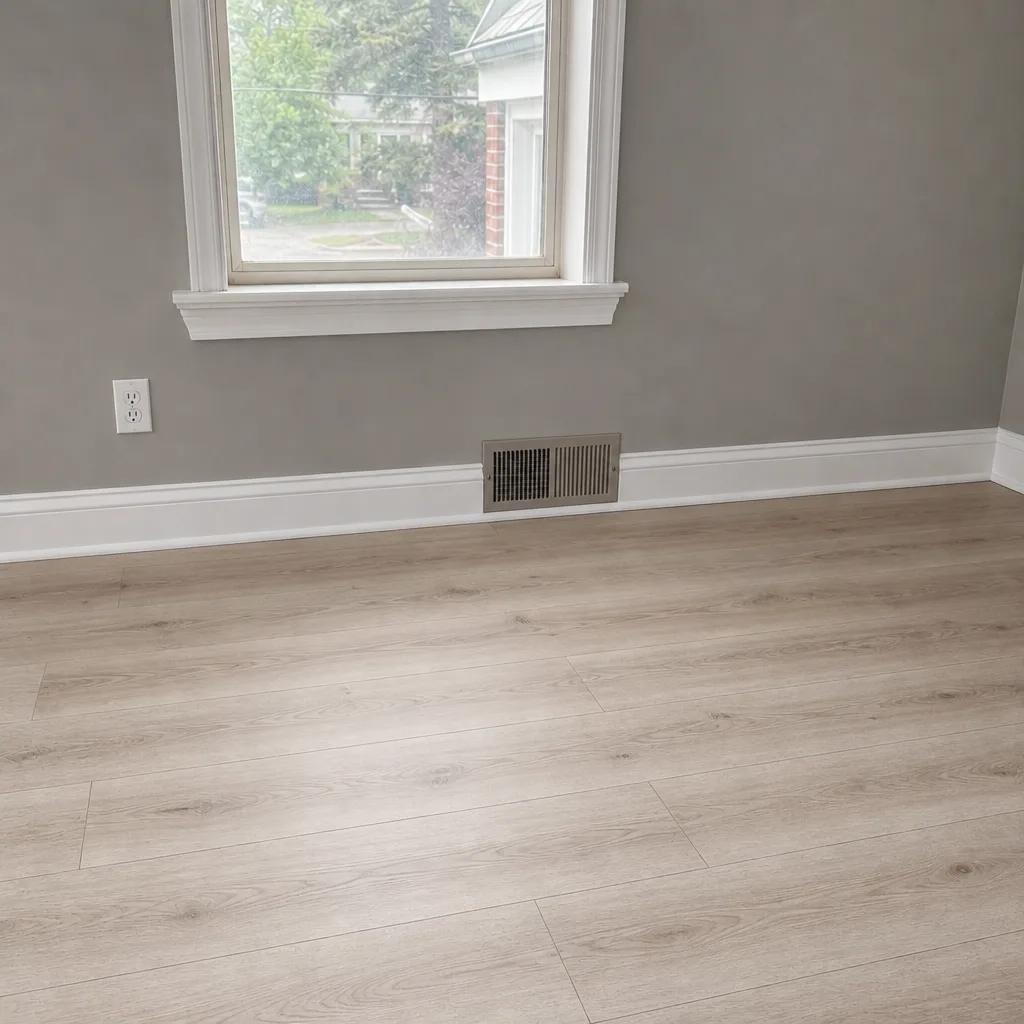 After
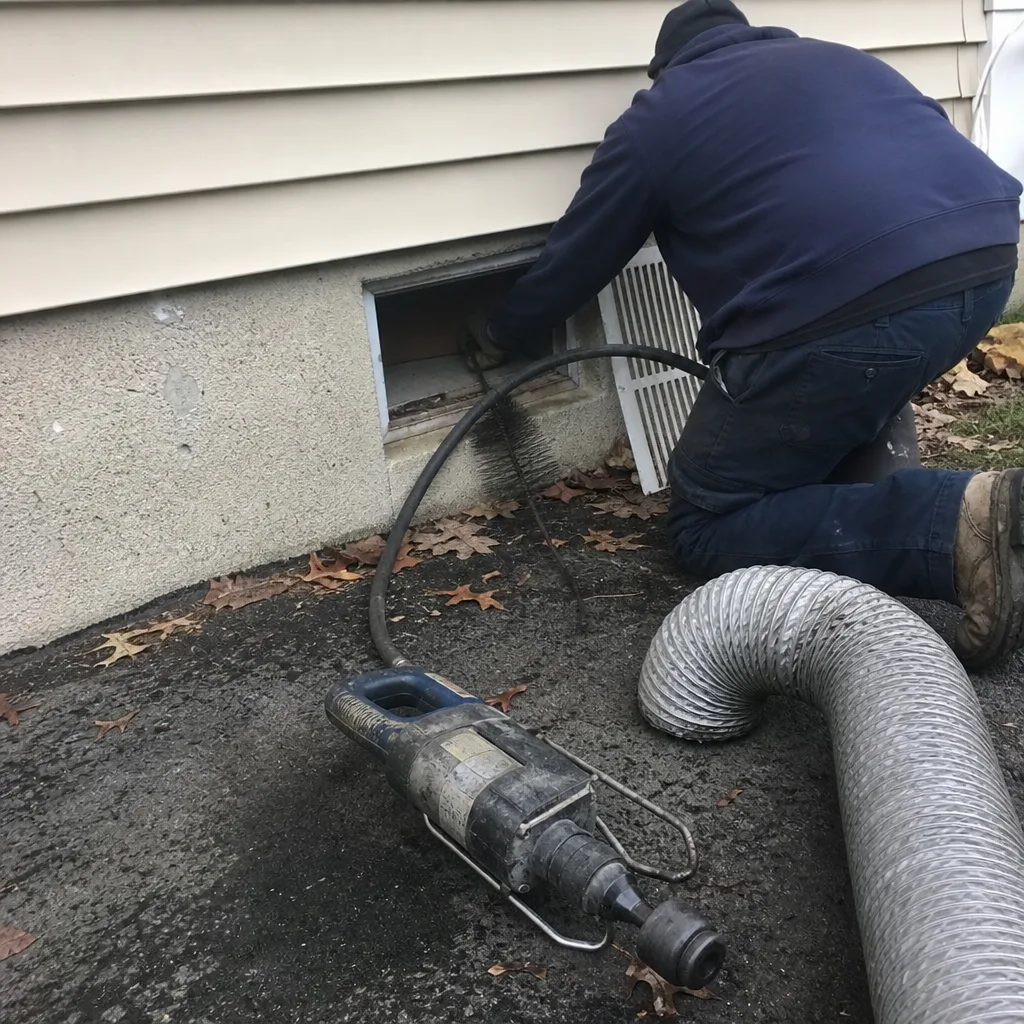 Before
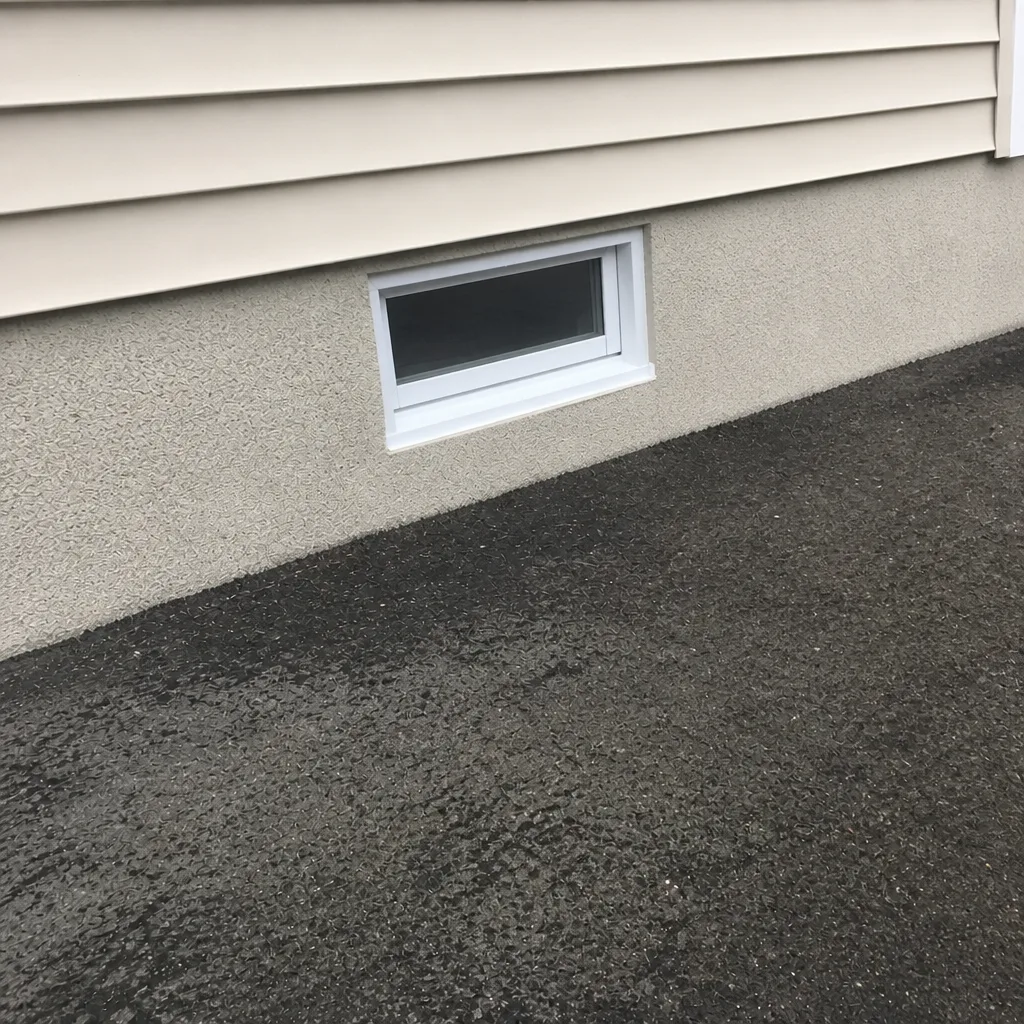 After
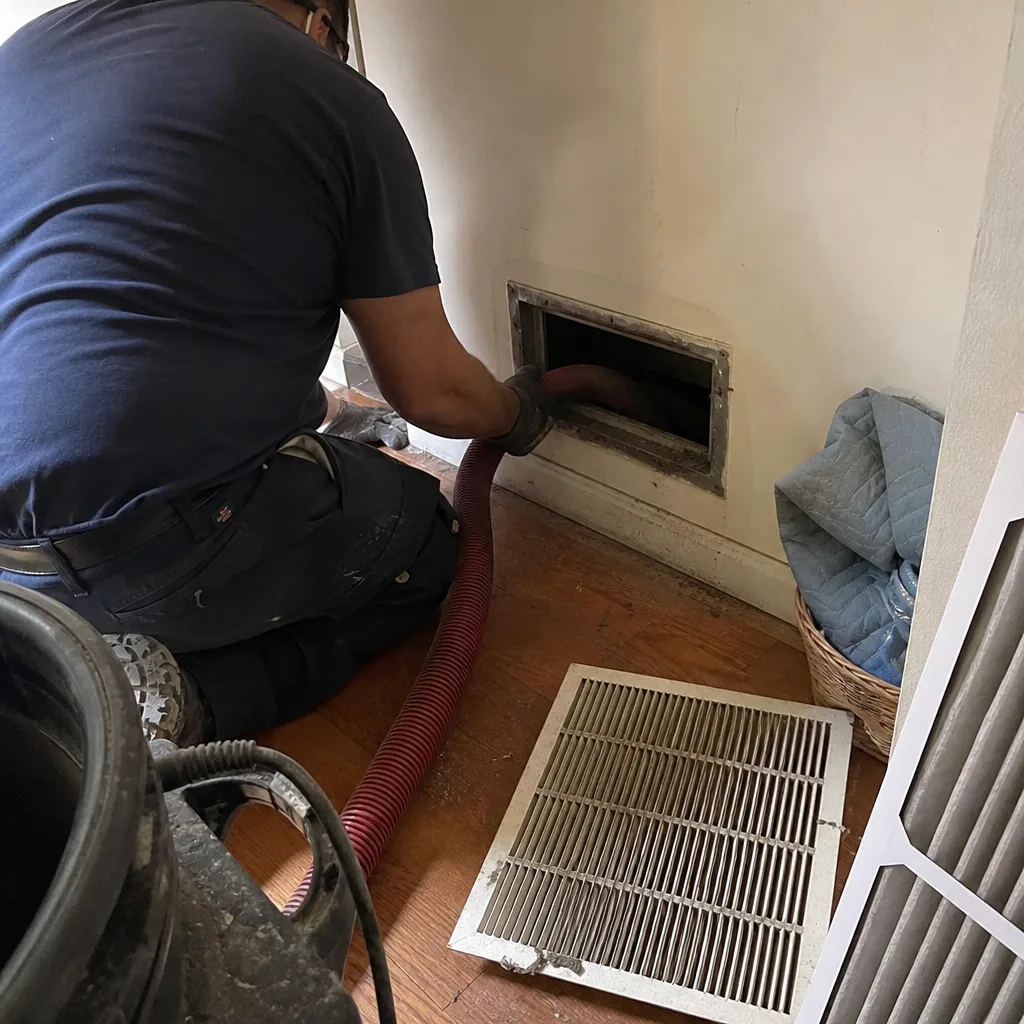 Before
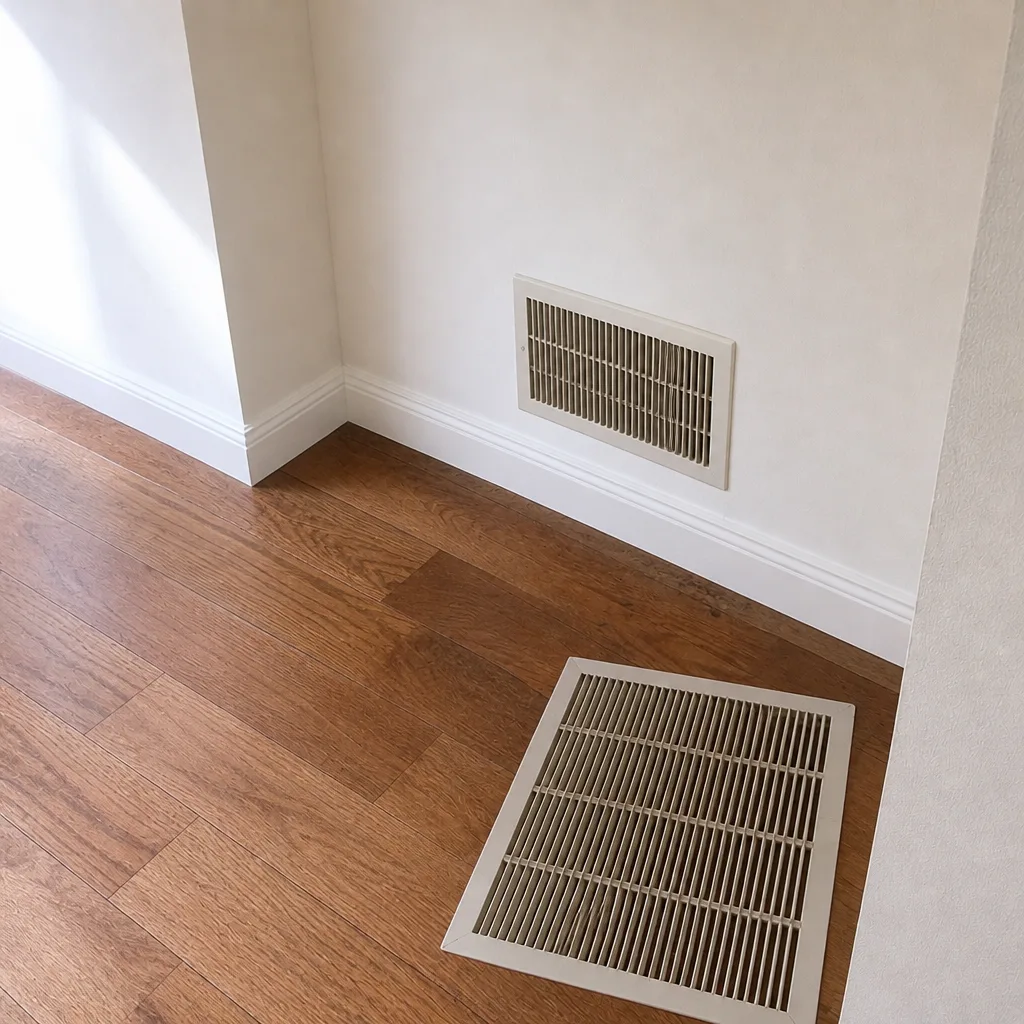 After
Frequently Asked Questions
Check the registers. If you see more than a light dust film inside the boot, or a heavy dust load at multiple registers, the ducts themselves are contaminated. If the system blows weakly at every register even after a filter change, the issue is more likely a duct restriction or leak than equipment. Either way, a visual inspection at the registers and returns is the fastest way to sort one from the other. Call (844) 619-2446 for a free estimate if you want a specialist diagnosis.
Only if the cold room is caused by a contaminated run. If the run serving that room is crushed, disconnected, or undersized, cleaning won’t restore the flow. It needs a repair. A specialist determines which one you have before any work gets booked. Call us for a written estimate and we’ll check the run before quoting cleaning.
Cleaning removes dust and contamination from inside the duct. Repair fixes the physical duct: reconnecting or replacing deteriorated runs, sealing joints and boots, and re-supporting sagged flex duct. Some systems need both, some need only one. If you’re not sure which your system needs, ask any provider to explain which problem they’re solving before they schedule work.
Usually equipment and containment. A quote built around a shop vac and no containment costs less because less of the system actually gets cleaned. The professional-grade outcome involves Rotobrush brush equipment, Nikro vacuum systems, and Abatement Technologies containment, and comes with a written scope of what gets cleaned and what doesn’t. Ask any provider for their scope and equipment list before booking. Call (844) 619-2446 for a free estimate and a straight comparison.
No. It handles the boot but not the long runs, trunk line, or plenums where most of the debris accumulates. Worse, it can dislodge debris into an already restricted run and worsen the symptom. Professional equipment drives the brush through the full duct and pulls the debris back out in a contained vacuum. If airflow is the symptom, professional equipment is the non-negotiable part.
Often yes when the scope is clear after the inspection. Duct Cleaning Waterbury does both as standalone services under one call, so you don’t need to book a second contractor for the repair. Call (844) 619-2446 for a free estimate. We’ll tell you which part of the work is cleaning, which is repair, and what the written quote covers before anything starts.
The Bottom Line
Temperature swings, whistling registers, and dust that keeps coming back are duct symptoms. Not equipment failures. Read them correctly and you’ll solve the actual problem. The four causes to look for are contamination, leaks, deteriorated flex or duct board, and a misbehaving dryer vent. Basic register inspection tells you which category you’re facing in fifteen minutes. Cleaning handles contamination. Repair handles the physical breakdown. The two aren’t interchangeable, and no amount of professional equipment substitutes for the right scope. If you’re not sure which one your Waterbury home needs, that’s the moment to call a specialist instead of a generalist. The right tools matter. So does the right diagnosis.
Ready to check your system? Call (844) 619-2446 for a free estimate. We answer 24/7. Fast dispatch from 7am to 7pm, Sunday through Friday. Our technicians have up to 9 years of experience, work with Rotobrush and Nikro equipment, and use Abatement Technologies containment so your cleaning stays contained. Clean ducts, safe dryer vents, repaired ductwork. One call. Visit our air duct cleaning service page to see how a full cleaning visit runs.
Written by the team at Duct Cleaning Waterbury.