
Last updated November 16, 2026
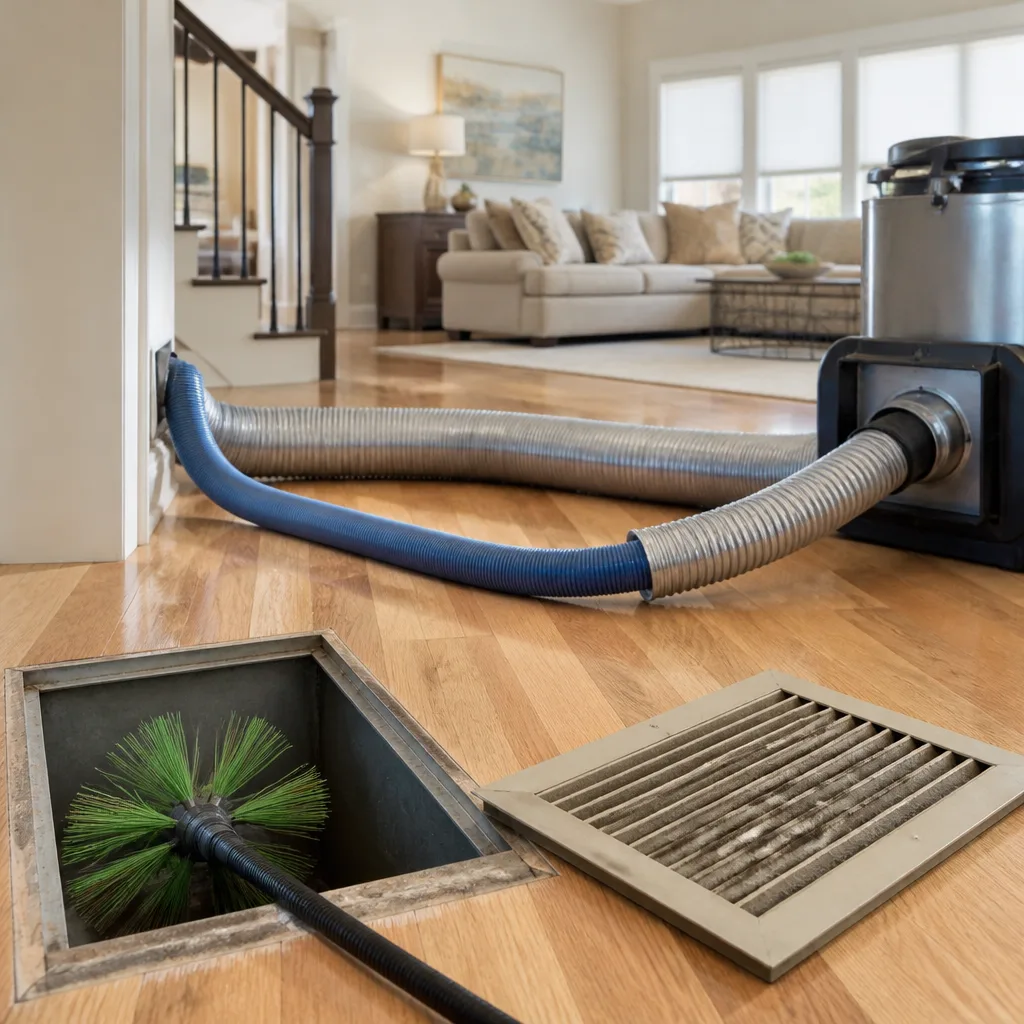 Whole-home duct cleaning
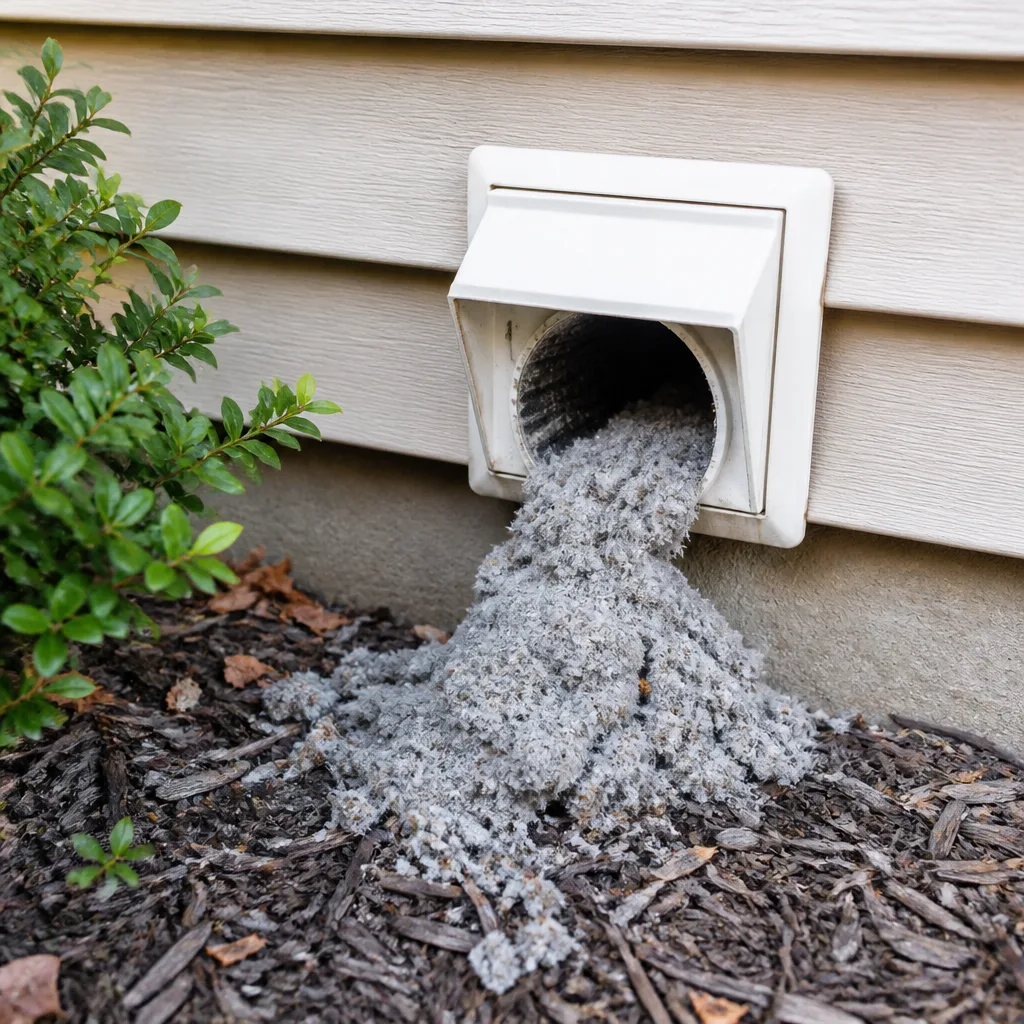 Dryer vent cleaning
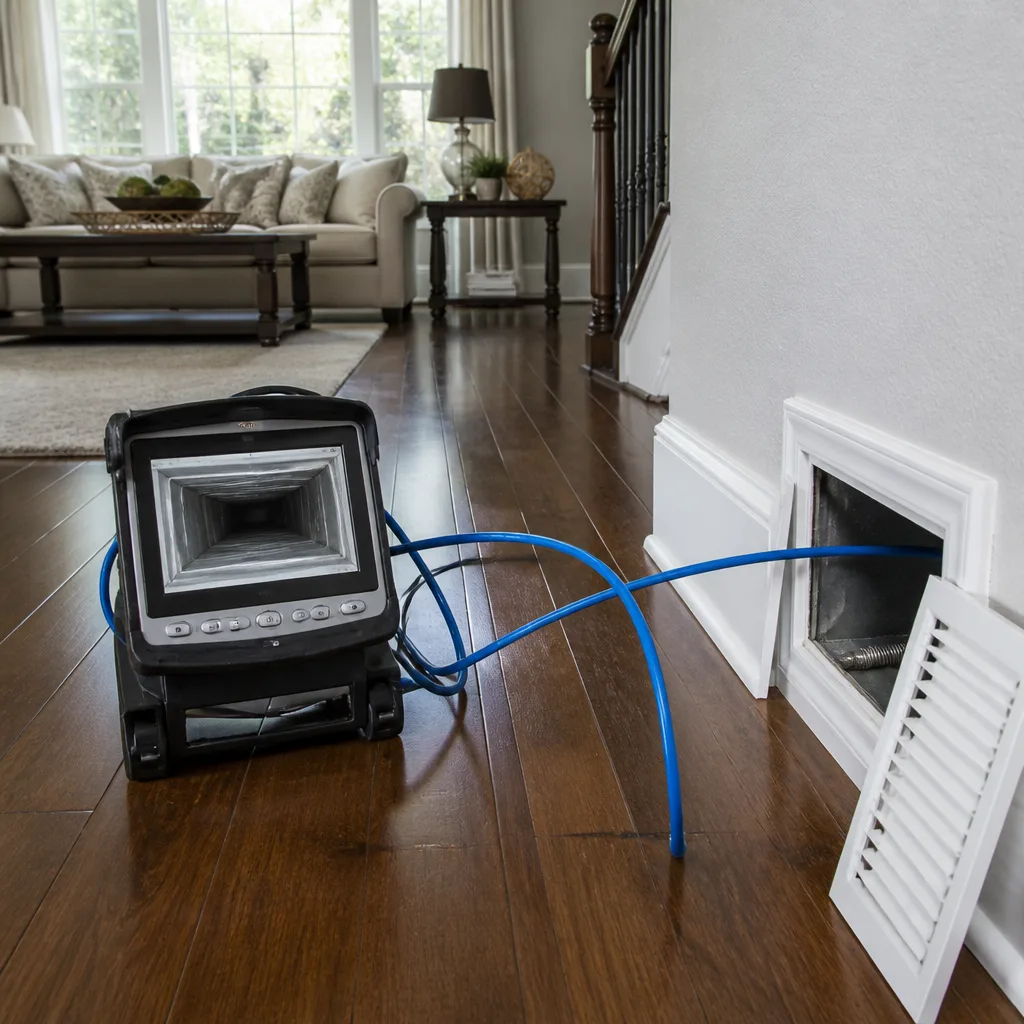 Camera inspection
 Sanitizing & deodorizing
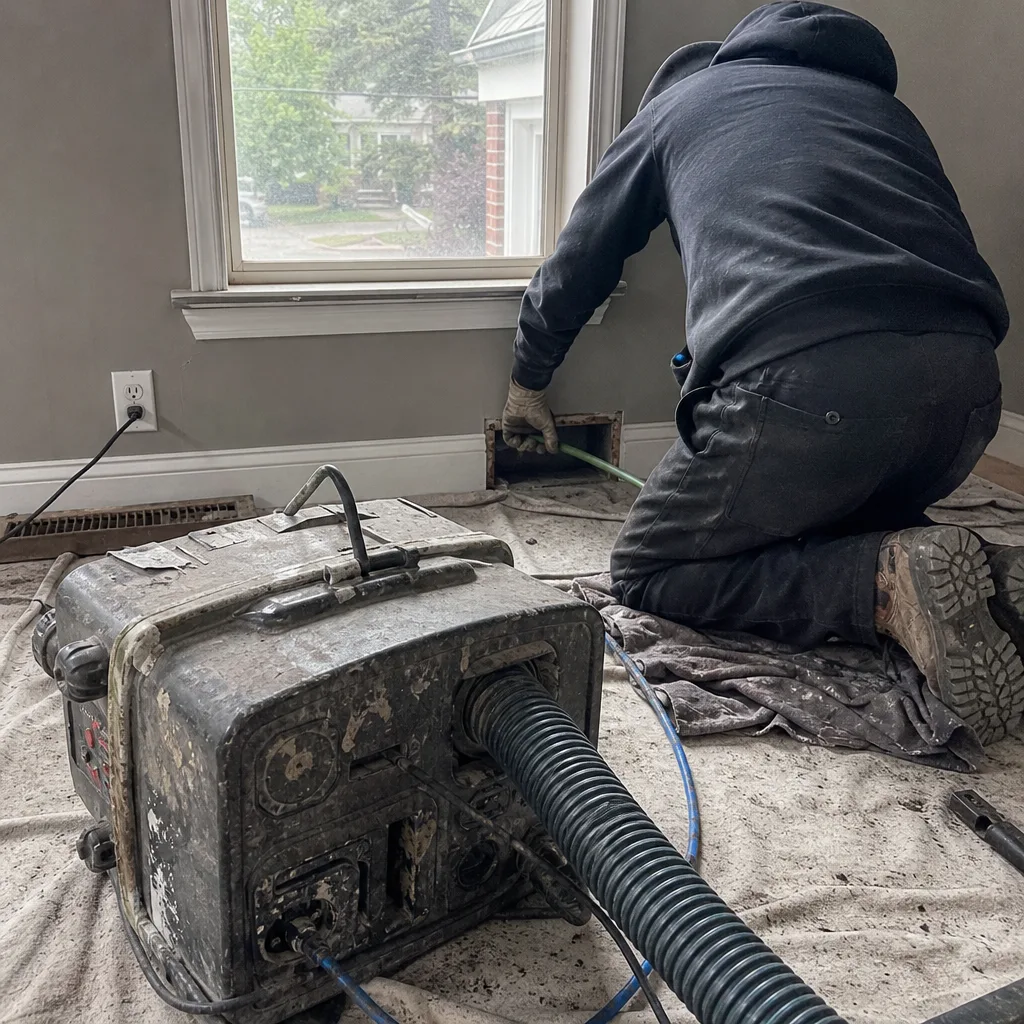
Whole-system duct and dryer vent check with before-and-after photos - you see exactly what came out of your vents
That "$99 whole-house special" is a bait ad - the real number appears once they are in your hallway, or the "clean" is a shop-vac at the register. We photograph the inside of your ducts before and after instead.
Air Duct Cleaning Permits, Codes & Inspections in Waterbury, CT: What You Need to Know
Most homeowners assume duct cleaning is permit-free and move on. That’s usually right – the cleaning itself rarely triggers a permit. But the moment a contractor cuts into ductwork to repair, replace, or reseal it, you’re in Connecticut mechanical permit territory. That line, between cleaning and mechanical repair, is where Waterbury homeowners get caught off guard. A duct run gets cut to fit a new register, nobody pulls a permit, and years later a home inspector flags it during a resale. This guide walks through what actually needs a permit, who enforces it in Waterbury, how mold inside ducts adds a second regulatory layer, and how to verify a contractor’s compliance without turning the conversation into a standoff. We’ve seen enough of these jobs to know the questions worth asking before work starts.
Quick Answer
In Waterbury, standard air duct cleaning does not require a permit because it involves no alteration to the mechanical system. Duct repair, replacement, or reconfiguration that cuts into the system or changes ductwork layout typically does require a mechanical permit under the Connecticut State Building Code, and that permit is pulled by the contractor, not the homeowner. Mold remediation inside ductwork may trigger separate notification requirements under Connecticut guidance, and unpermitted duct work can surface as a real problem during a home sale inspection.
Styles & brands we work with
- Whole-home duct cleaning
- Dryer vent cleaning
- Camera inspection
- Sanitizing & deodorizing
Table of Contents
- Cleaning vs. Repair: Where the Permit Line Actually Falls
- What the Connecticut State Building Code Says About Duct Work
- Who Enforces Permits in Waterbury, and How to Verify One
- Mold Inside Ducts: The Second Regulatory Layer
- What Happens at a Home Sale When Duct Work Was Never Permitted
- How to Ask a Contractor to Document Compliance
- A Step-by-Step Way to Confirm Your Duct Work Is Legit
- When Cleaning Turns Into Repair: Reading the Signs
Cleaning vs. Repair: Where the Permit Line Actually Falls
The distinction matters more than most homeowners realize. Cleaning removes accumulated dust, debris, and buildup from inside the duct system without changing its shape, size, or the way it connects to the furnace or air handler. No cutting. No new joints. No rerouting. In Waterbury, that kind of work typically doesn’t trigger a permit as long as nothing in the mechanical system is modified.
Repair is different. When a technician has to cut a section of duct out because it’s crushed, disconnected at a joint, or sealed shut with failed mastic, that’s mechanical work. Same goes for adding a new run to an unserved room, resizing a chase to improve airflow, or replacing a length of flexible duct that’s torn or sagging. These changes are alterations to the mechanical system, and alterations are what the code cares about.
Here’s where Waterbury’s older housing stock comes in. A lot of homes in the city were built during decades when duct systems were put in with materials that don’t age well – older flex duct that cracks at the seams, sheet metal joints sealed with duct tape that dried out long ago, and trunk lines running through unheated crawl spaces. When we clean a system like that, we regularly find sections that have already failed in one way or another. That’s when the job moves from cleaning (no permit) to repair (permit likely required).
Not every repair needs a permit. A simple reconnect of a boot to a floor register, or re-securing a section that slipped off a collar, is often treated as routine maintenance. But anything that involves cutting into the system, replacing a run, or altering the layout needs to be checked against the code before work starts. The best move is to ask the contractor, in writing, whether the scope they’ve quoted involves permitted mechanical work. If they can’t give you a straight answer, that itself tells you something.
- Cleaning only: typically no permit needed, no mechanical alteration
- Sealing with mastic or tape at existing joints: usually no permit, minor maintenance
- Cutting out and replacing a duct section: mechanical permit usually required
- Adding a new duct run: mechanical permit usually required
- Rerouting or resizing ductwork: mechanical permit usually required
What the Connecticut State Building Code Says About Duct Work
The Connecticut State Building Code governs mechanical systems through provisions that align with national model codes. Section M1601 covers duct systems specifically – materials, installation, sealing, and support. The code doesn’t say “every duct cleaning needs a permit.” It says that mechanical work, which includes installation and alteration of duct systems, is regulated and generally requires a permit pulled by the contractor performing the work.
What that means in practice for a Waterbury homeowner:
- New duct installation requires a permit and inspection. This applies to a new run added after a renovation, or ductwork installed as part of a system replacement.
- Alteration of existing ductwork requires a permit when it changes the mechanical system – rerouting, resizing, or replacing sections that affect how the system performs.
- Cleaning and maintenance that leaves the system as it was generally falls outside the permitting scope.
- Sealing at existing joints to stop leaks is usually treated as maintenance, though extensive resealing as part of a larger repair job may get bundled into that permit.
One detail worth knowing: the permit needs to be pulled by the contractor doing the work. In Connecticut, a homeowner can pull a permit for their own primary residence in some cases, but a professional contractor working on your duct system is the one responsible for pulling it. If a contractor suggests you pull the permit yourself to “save time,” that’s a red flag. The permit exists to make sure a licensed party is signing off on the work and that an inspector gets to look at it.
In our experience running duct cleaning and repair in Waterbury, code questions come up most often when a job uncovers something structural. A duct that’s separated at the plenum, corroded sheet metal at a boot, or a run that’s sagging under the weight of its own insulation all move the job from cleaning into repair territory. When that happens, we tell the homeowner plainly what the scope change means – including whether a permit is likely needed – before anyone touches a tool.
Who Enforces Permits in Waterbury, and How to Verify One
Building permits in Waterbury are issued and inspected by the city’s building department, and that office is where you verify whether a permit has been pulled for work at your address. The process is straightforward if you know what to ask.
- Ask the contractor for the permit number before work begins. If they’ve pulled it, they have a number to share.
- Call the building department and give them the address and permit number. They can confirm the permit exists, who pulled it, and what scope it covers.
- Check that the scope matches the work. A permit for “replace furnace” doesn’t cover duct repair. Make sure the permit describes the actual job.
- Ask about the inspection schedule. A permitted job requires an inspection at specific stages, and the contractor should be able to tell you when the inspection happens relative to the work.
- Get the final inspection signed off. Once the work is done and inspected, request a copy of the signed-off permit for your records. It’s the document that proves the work was legally done.
A permit is not a bureaucratic formality. It means a licensed professional signed off on the scope, an inspector reviewed the work against code, and the record exists at the city level. That record matters later, especially when you go to sell the home.
Waterbury’s housing stock is old and varied, from triple-deckers to mid-century ranches to newer construction on the edges of town. Permit records for older homes in this city can be thin, and that’s exactly why pulling permits for new mechanical work – and keeping the paperwork – matters more here than in a market where everything was built recently. If a buyer’s inspector finds unpermitted duct work in a Waterbury home, the burden falls on the seller to prove the work was done legally or to have it redone under permit.
Mold Inside Ducts: The Second Regulatory Layer
When duct cleaning uncovers significant mold growth inside the system, the job stops being a straightforward cleaning question. Connecticut guidance on mold remediation sets expectations for how mold in a home should be assessed and addressed, and the Department of Energy and Environmental Protection (DEEP) is the state agency that provides the framework homeowners and contractors reference when mold becomes a concern. That guidance doesn’t create a permit requirement the way mechanical work does, but it does introduce a separate set of expectations around how the work is done.
What that means in a Waterbury home:
- Containment matters. Cleaning a mold-affected duct system without proper containment can spread spores into the living space. This is where professional containment equipment – like the Abatement Technologies negative-pressure setups we work with – makes a real difference.
- Cleaning vs. remediation. Light surface mold inside a duct can often be cleaned. Heavier growth, especially when it recurs after cleaning, may point to a moisture source that needs to be fixed before cleaning is worth repeating.
- Documentation. If mold was found, you want a record of what was identified and what was done about it. Photos, notes, and a clear scope of work all help – both for your own peace of mind and for any future disclosure you may need to make when selling.
- Deeper investigation. When mold growth is extensive, a home inspection or indoor air quality professional may need to evaluate the source before duct work proceeds. Cleaning mold without fixing the moisture is a short-term fix.
Mold questions come up more often than you’d expect in Waterbury’s older homes – particularly where a duct run passes through a basement that stays damp, or where a system has been sitting unused for a period. If you smell something musty every time the heat kicks on, or if family members with allergies notice symptoms that spike when the system runs, that’s worth investigating before the next cleaning appointment.
What Happens at a Home Sale When Duct Work Was Never Permitted
A home inspection during a Waterbury sale can turn up unpermitted duct work, and when it does, the situation gets complicated fast. Here’s how it typically plays out:
- The inspector flags it. Unpermitted mechanical alterations are commonly spotted by home inspectors who know what to look for – duct runs that were clearly added as an afterthought, joints that don’t match the rest of the system, or a layout that doesn’t make sense against the home’s original construction.
- The buyer asks for documentation. The buyer’s agent wants to know the work was done legally. That means a permit record and a passed inspection.
- The seller has to prove it or fix it. If the permit isn’t there, the seller’s options narrow: they can have the work re-inspected if the city allows retroactive permitting and the work meets code, or they can have it redone under permit, or they can offer credits and hope the buyer accepts. None of those options are painless.
- The deal can lose momentum. Unpermitted work becomes a negotiating lever for the buyer. In a competitive Waterbury market, that leverage can turn into a lower price or a stalled closing.
The lesson: pull the permit when the work happens. It costs less than dealing with the mess later. And keep the paperwork. A signed-off mechanical permit in your file is proof the work was done correctly and legally. When you go to sell, that file answers questions before they become problems.
The city’s active resale market means this comes up regularly. Waterbury homes move, and buyers are cautious about unpermitted work. If you’ve had duct work done and the contractor said “we don’t bother with permits for this,” that’s not a shortcut – it’s a deferred problem. If it happened years ago and you don’t know the status, getting it verified now, before you list, is easier than addressing it under a buyer’s deadline.
How to Ask a Contractor to Document Compliance
Asking a contractor whether they’re pulling a permit shouldn’t feel adversarial. The professional ones expect it. They know that a homeowner asking about permits is a sign they’re paying attention, not that they’re being difficult. Here’s how to frame the conversation so it stays straightforward:
- Ask before work starts. “Will this job require a permit, and if so, will you be pulling it?” Simple, direct, and easy to answer. If the answer is “we’ll see once we’re in there,” push for a clearer scope before you sign.
- Request the permit number and scope. “Can you share the permit number once it’s pulled, so I have it for my records?” A contractor who’s habitually pulling permits will have no problem with this.
- Ask what the inspection covers. The permit inspection reviews the work against code. Knowing what’s being inspected helps you understand what done actually means.
- Ask for before-and-after photos of your own system. This is standard practice for a professional duct cleaning job regardless of permit status, and it gives you a visual record of what was done. Photos of your ducts before and after work are proof of service.
- Ask for the signed-off permit at completion. “Can I get a copy of the signed-off permit when the work is done?” If they’ve done this before, they’ll know exactly what you’re asking for.
We hand over before-and-after photos as a matter of course. It answers a lot of questions without back-and-forth. Homeowners who’ve been burned by a low bid need proof the work was actually done, and photos are the simplest form of that.
On our air duct cleaning jobs in Waterbury, we go through the scope with the homeowner before anything is scheduled. If the job is a straight cleaning, no permit. If the job uncovers a repair that needs one, we tell them what that means, what the permit covers, and what the homeowner needs to ask us for. That clarity is what we’d want if the roles were reversed.
A Step-by-Step Way to Confirm Your Duct Work Is Legit
Whether you’re prepping for a sale, checking on work done years ago, or getting quotes for new repair, here’s a step-by-step way to confirm the duct work at your Waterbury home is properly documented.
- Pull out any paperwork you have. Old permits, invoices, inspection reports. Look for anything that says “mechanical permit” or references duct work.
- Contact the Waterbury building department. Give them the address and ask whether permits have been issued for duct or mechanical work there. They can search the property record.
- Compare the permit record to the work you see. If you have a permit for a furnace replacement but see a clearly added duct run that isn’t on the permit, that’s a gap worth investigating.
- Get a professional assessment. A duct specialist can tell you whether a given run looks like an original installation or a later addition, and whether it was installed to standard. That’s part of the assessment on any repair-focused visit.
- Document what you have. If the work was permitted, keep the paper. If it wasn’t, get a written assessment of what needs to happen next – retroactive permitting, redone work, or a correction that brings it into compliance.
- Follow up on corrections. If a licensed contractor identifies a fix, get it done and documented. A signed invoice plus the permit record is the strongest proof you can have.
This is also the conversation to have before a duct cleaning appointment if you’re unsure what you’re dealing with. Our technicians have up to 9 years of experience with duct systems, and part of that experience is knowing what unpermitted work looks like versus what was installed originally. Getting that assessment before a cleaning or dryer vent cleaning appointment means you know exactly what you’re dealing with.
When Cleaning Turns Into Repair: Reading the Signs
You can’t always tell from the outside whether a duct system needs repair. But there are some consistent signs that cleaning alone won’t solve what you’re seeing.
- Weak airflow in some rooms but not others. That’s a sign of a duct run that’s disconnected, crushed, or leaking significantly. Cleaning won’t fix a run that isn’t connected.
- Visible gaps or separations at joints. If you can see daylight, you’re losing airflow and pulling in attic or crawl space air. That’s a repair issue.
- Crushed or collapsed flex duct. Flex duct that’s been stepped on in an attic or crawl space, or crushed where it meets a boot, restricts airflow. Cleaning won’t help; the duct has to be replaced.
- Rust or condensation on duct exterior. Moisture on the outside of a duct run means temperature loss or a leaking system. That’s something to investigate before cleaning.
- Musty smell that returns within months of cleaning. Cleaning removes buildup, but if the smell comes back fast, the source is moisture, and moisture means mold, and mold means the system needs more than a cleaning.
In Waterbury, homes with duct runs through older basements and crawl spaces see these issues more often than you might expect. A basement that stays humid in summer, combined with a duct run that’s insulated poorly, is a setup for condensate on duct, which leads to mold growth. When we open a system up and find those signs, we shift from cleaning to duct cleaning Waterbury style assessment – meaning we look at the whole picture, including whether repair is on the table and whether a permit comes into play.
Repair is one of our three core services, alongside cleaning and dryer vent work. If your job turns into a repair, we’re not handing you off to another contractor. We close the loop. That’s the practical difference of a duct-only specialist over a generalist who cleans ducts as an add-on.
Common Mistakes to Avoid
- Assuming no permit is ever needed for duct work. Cleaning doesn’t need one; repair often does. Make the contractor tell you which category your job falls into before you sign.
- Letting the contractor ask you to pull the permit. In Connecticut, the professional doing the work is the one who pulls the permit. If they ask you to do it, ask why.
- Skipping the inspection sign-off. A permit without a passed inspection is only half the story. Get the signed-off copy in your file when the work is done.
- Cleaning a mold-affected system without addressing the moisture. Cleaning mold growth inside ducts won’t fix the problem if the source of moisture is still there. Address the source first, then clean.
- Assuming a low quote means the contractor is doing the work legally. Low quotes often skip permits entirely, which is why they’re low. A cheap job that gets flagged at resale is not a cheap job.
- Never checking the permit record before you sell. If a home inspector flags duct work during a sale in Waterbury, the seller has to answer. Checking the record before listing removes that surprise.
- Taking a contractor’s word that “we don’t need permits for this.” That’s sometimes true and sometimes not, depending on scope. Ask for a written statement about the permit question, and compare it to the code language in this guide.
See the difference
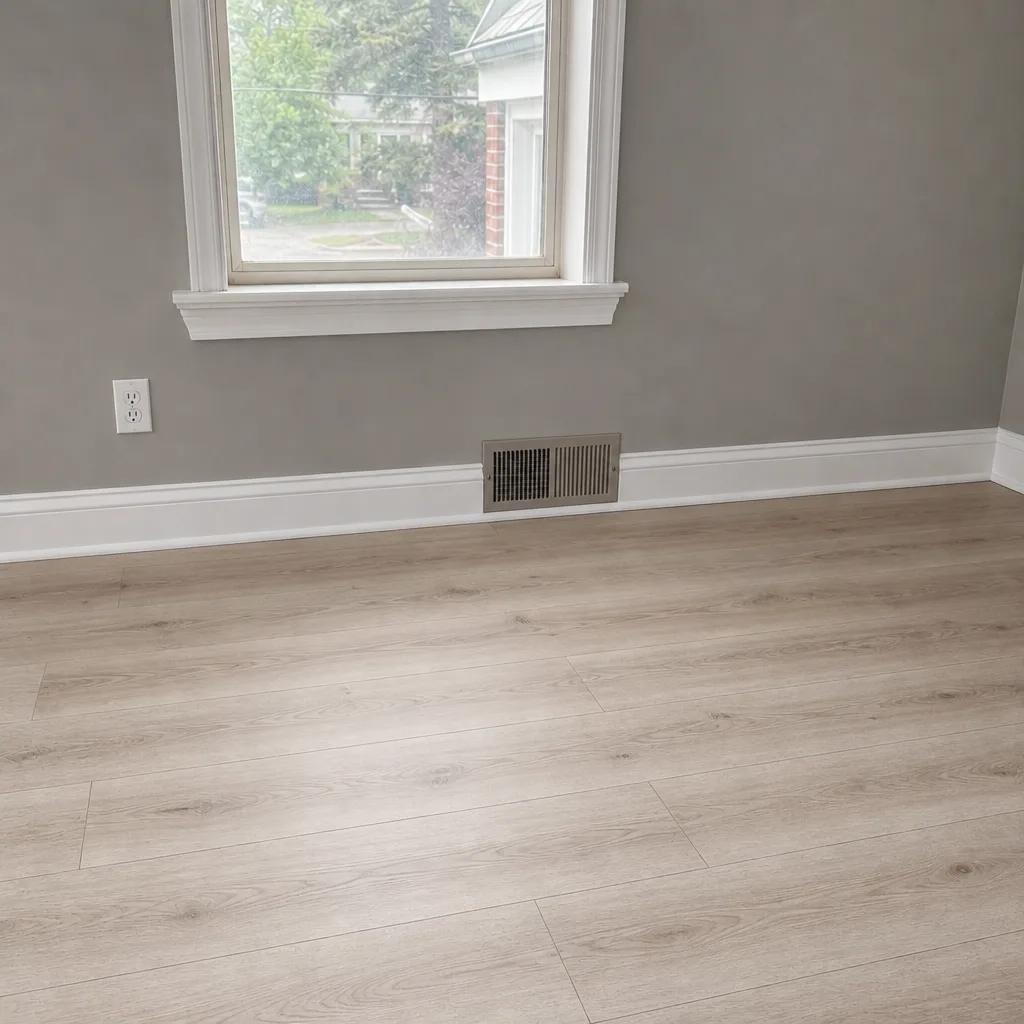
 Before
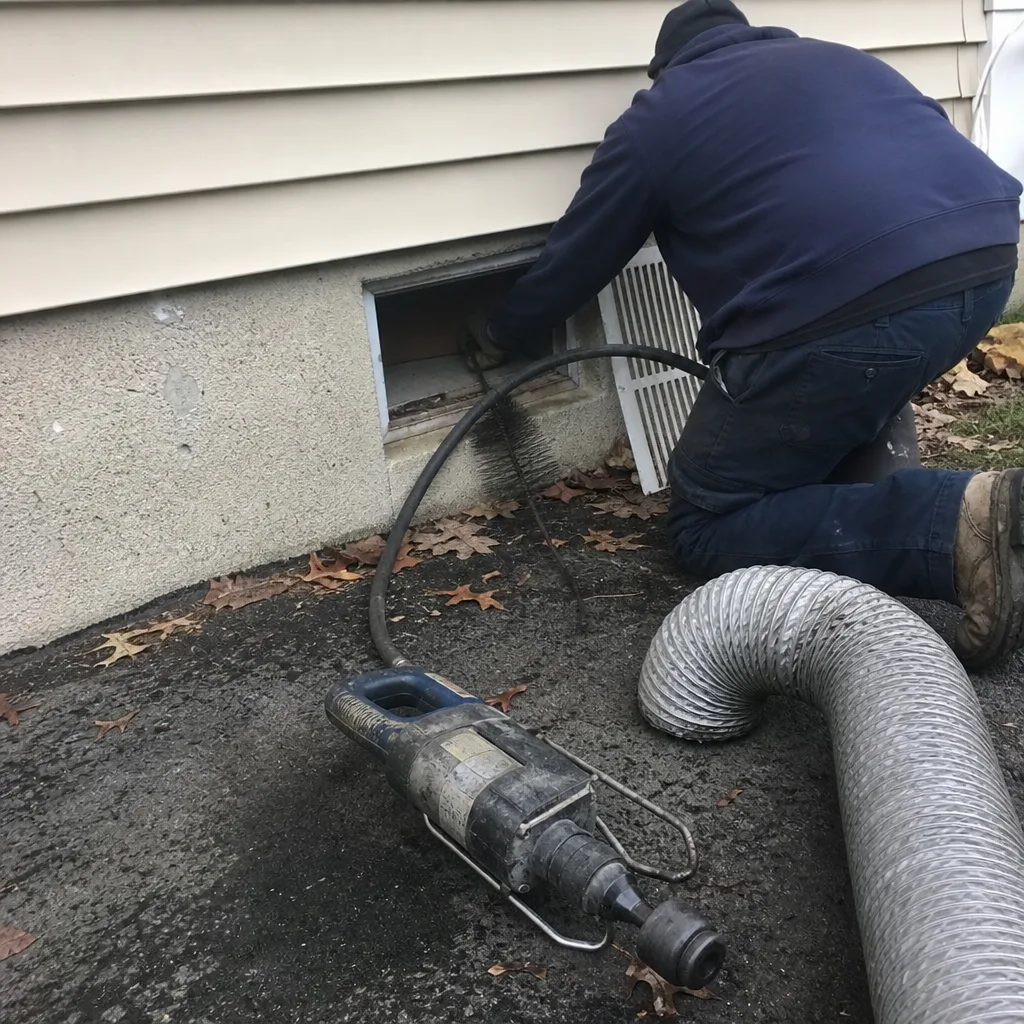
 After
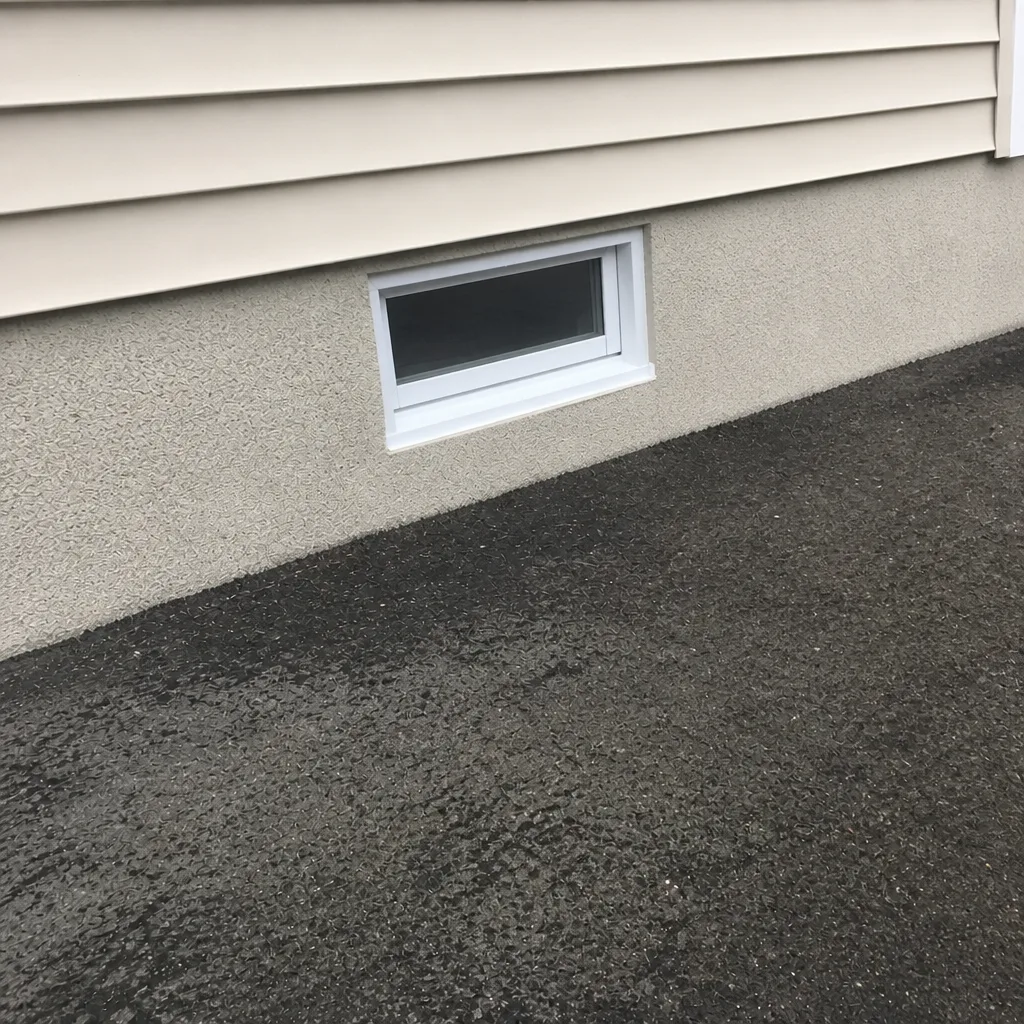
 Before
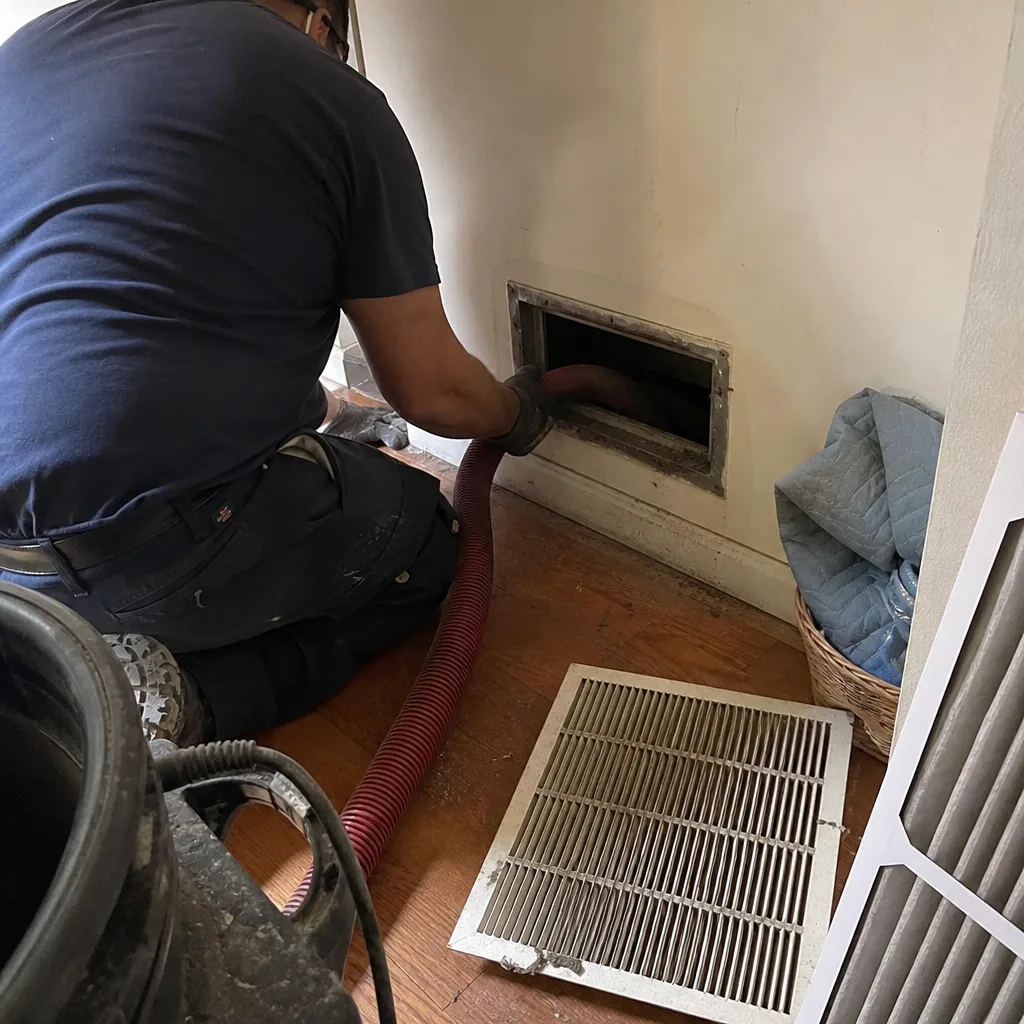
 After
 Before
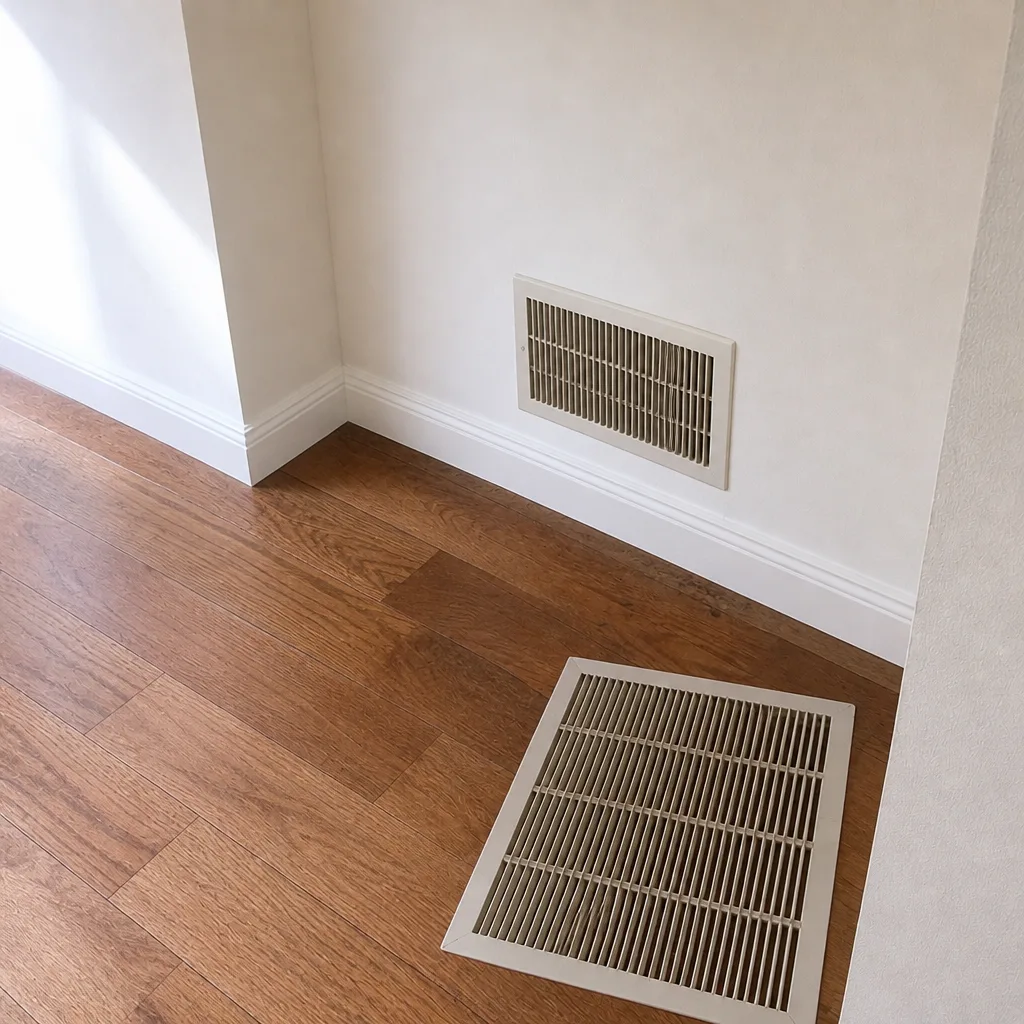 After
When to Call a Professional
Some duct questions are answerable from a guide. Others need someone to put eyes on the system. The ones we’d suggest called in:
- You see or smell mold, especially when the system runs.
- You’re getting a home inspection and duct work is on the findings.
- A duct run has separated, collapsed, or clearly isn’t reaching a room it should serve.
- You’re planning a repair and aren’t sure whether a permit is involved.
- You want a documented assessment of your duct system before you sell.
Duct Cleaning Waterbury offers free estimates in Waterbury. We work with Rotobrush and Nikro equipment, use Abatement Technologies containment on jobs where it matters, and carry Honeywell and Aprilaire product lines for air-quality work. Call (844) 619-2446 for a free estimate. We answer 24/7. Fast dispatch from 7am to 7pm, Sunday through Friday.
Frequently Asked Questions
Standard air duct cleaning in Waterbury typically does not require a permit, because cleaning doesn’t alter the mechanical system. A permit is generally needed when duct repair, replacement, or reconfiguration involves cutting into the system or changing the duct layout. Ask the contractor to confirm which category your job falls into before work starts.
Duct repair that alters the mechanical system usually requires a mechanical permit under the Connecticut State Building Code, with duct systems covered under Section M1601. The permit is pulled by the contractor performing the work, not by the homeowner. Small maintenance-level fixes like resecuring a boot are often exempt.
Contact the Waterbury building department with your address and ask whether permits have been issued for duct or mechanical work on the property. Give them the permit number if the contractor provided one. You can also ask the department whether any permits exist for the system at your address, even if you don’t have a number.
Mold inside ductwork doesn’t create a permit requirement the way mechanical work does, but it does bring in a separate set of expectations around how the work is done. Connecticut guidance on mold remediation, referenced through DEEP, emphasizes assessment and containment. Cleaning a mold-affected system without addressing the moisture source usually doesn’t solve the problem for long.
Unpermitted duct work can surface during a buyer’s home inspection, and when it does, the seller generally has to prove the work was legally done, redo it under permit, or negotiate credits with the buyer. The simplest fix is to pull the permit when the work happens and keep the paperwork in your files. Getting the permit record checked before you list is easier than dealing with it under a deadline.
Ask plainly: “Will this job need a permit, and will you be pulling it?” Professional contractors expect the question and answer it without hesitation. A contractor who deflects or suggests you pull the permit yourself is a signal worth paying attention to. Call (844) 619-2446 for an exact quote on your duct work – estimates are free.
Yes, but the unpermitted work usually becomes a negotiating point. Buyers’ inspectors flag it, buyers ask for proof or credits, and closings can slow down or stall. Options range from retroactive permitting to having the work redone. Getting it sorted before you list is almost always easier. For a documented assessment, call (844) 619-2446 – estimates are free.
Permit timelines vary by the scope of work and current building department turnaround. Ask the contractor for the permit application date and expected issuance before you commit to a start date. We can walk through practical scheduling on a free estimate when you call (844) 619-2446.
The Bottom Line
Cleaning and repair are not the same thing under Connecticut’s mechanical code, and that distinction is the whole story in Waterbury. Cleaning doesn’t need a permit; repair often does, and the contractor is the one who pulls it. Verify the permit through the city building department, ask for the scope up front, and keep the signed-off paperwork in your files. Mold inside ducts adds a second layer of expectations around containment and moisture, and unpermitted work in a Waterbury home sale is a real liability. The questions worth asking are simple ones. Professional duct contractors expect them. If you want a documented assessment of your system and a straight answer on permits, call (844) 619-2446 for a free estimate. We answer 24/7. Fast dispatch from 7am to 7pm, Sunday through Friday. Estimates are per job by written scope, and we service homes across Waterbury.
Written by the team at Duct Cleaning Waterbury.