
Last updated November 16, 2026
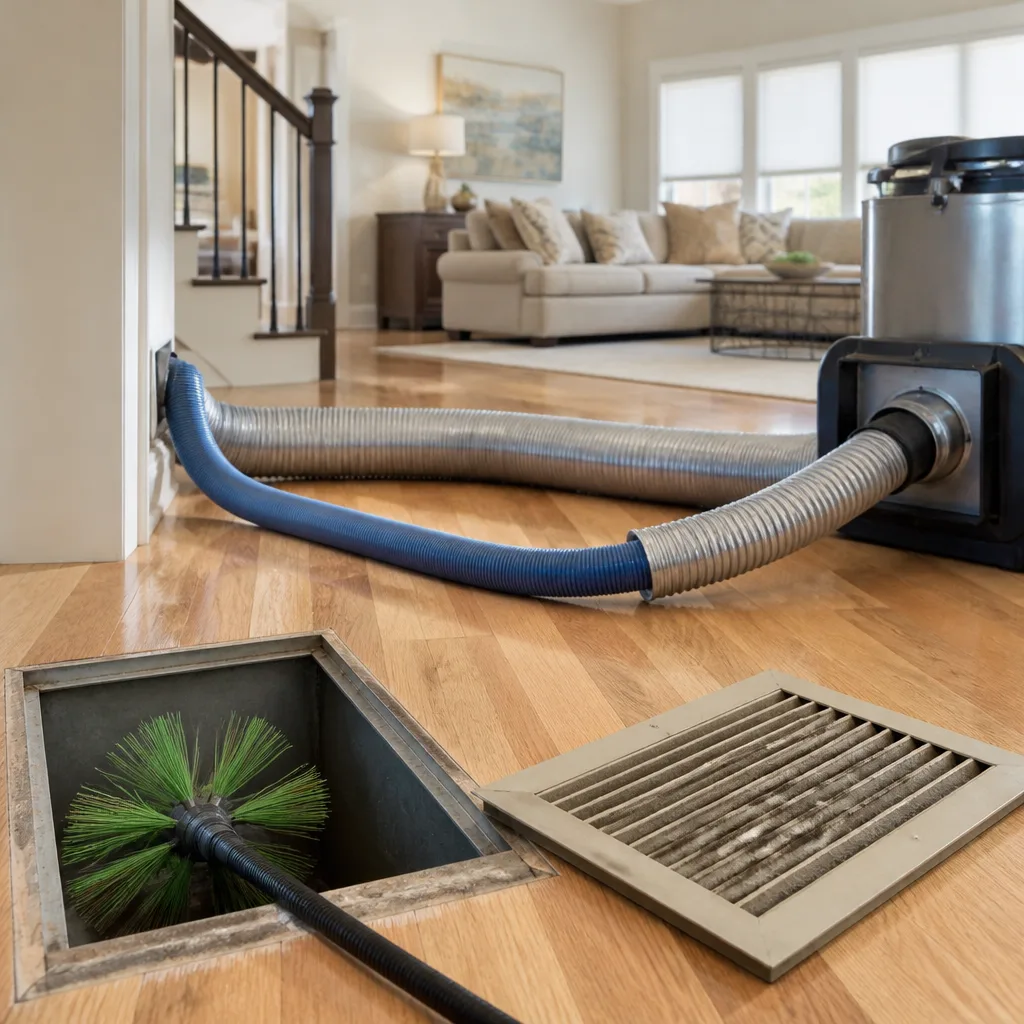 Whole-home duct cleaning
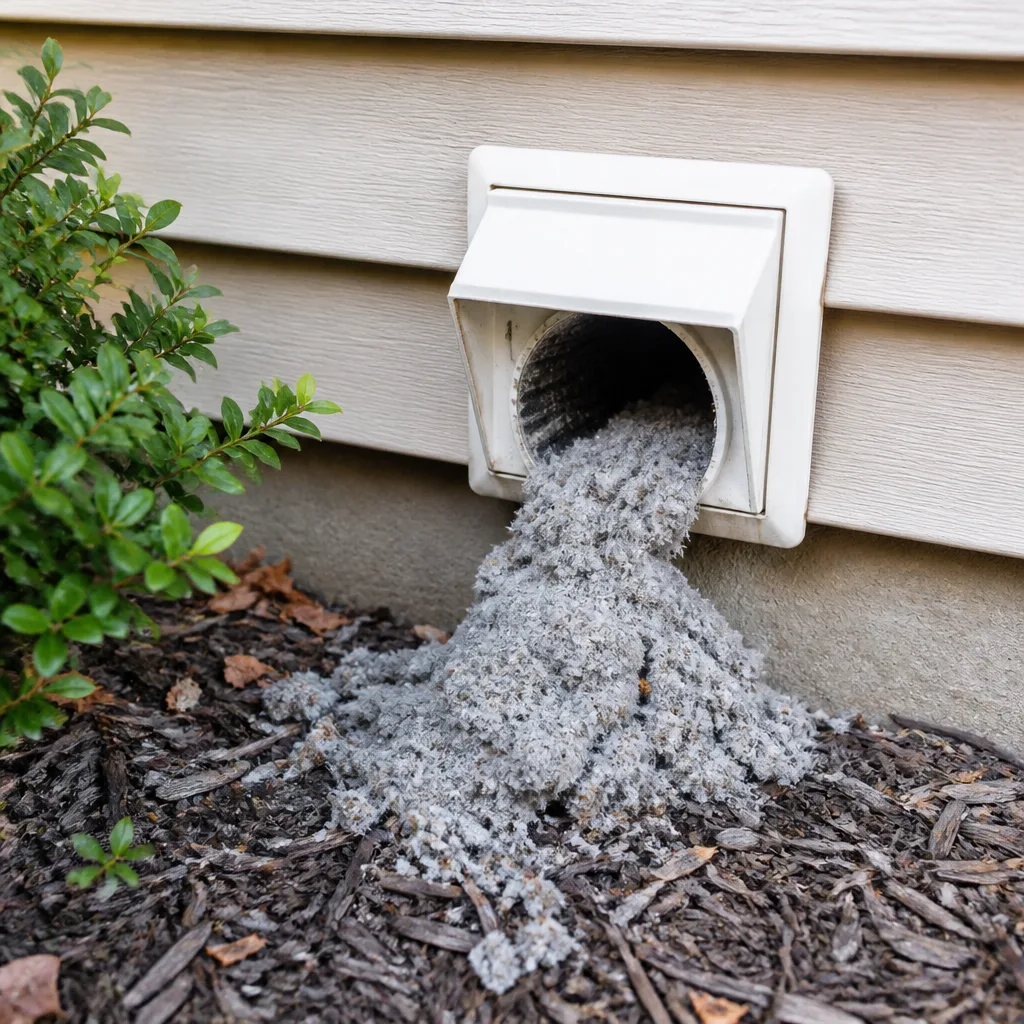 Dryer vent cleaning
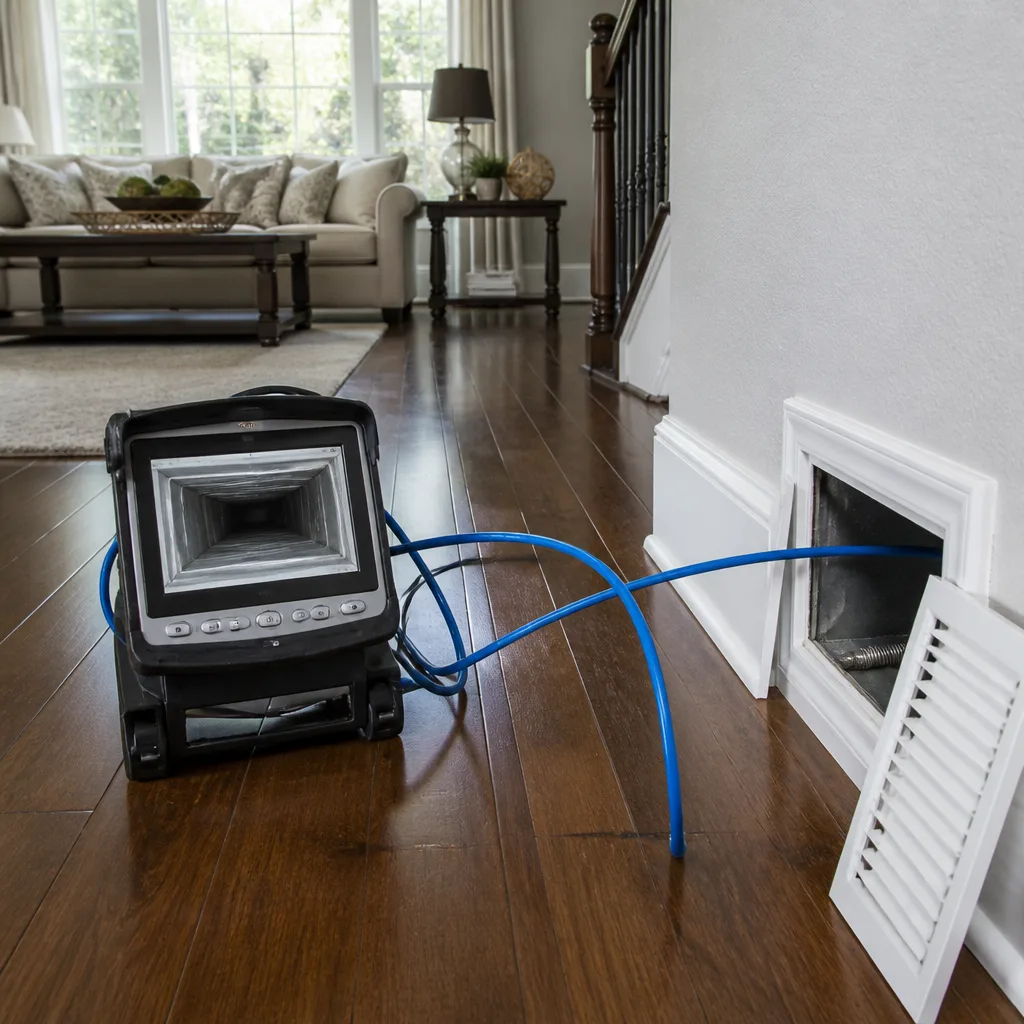 Camera inspection
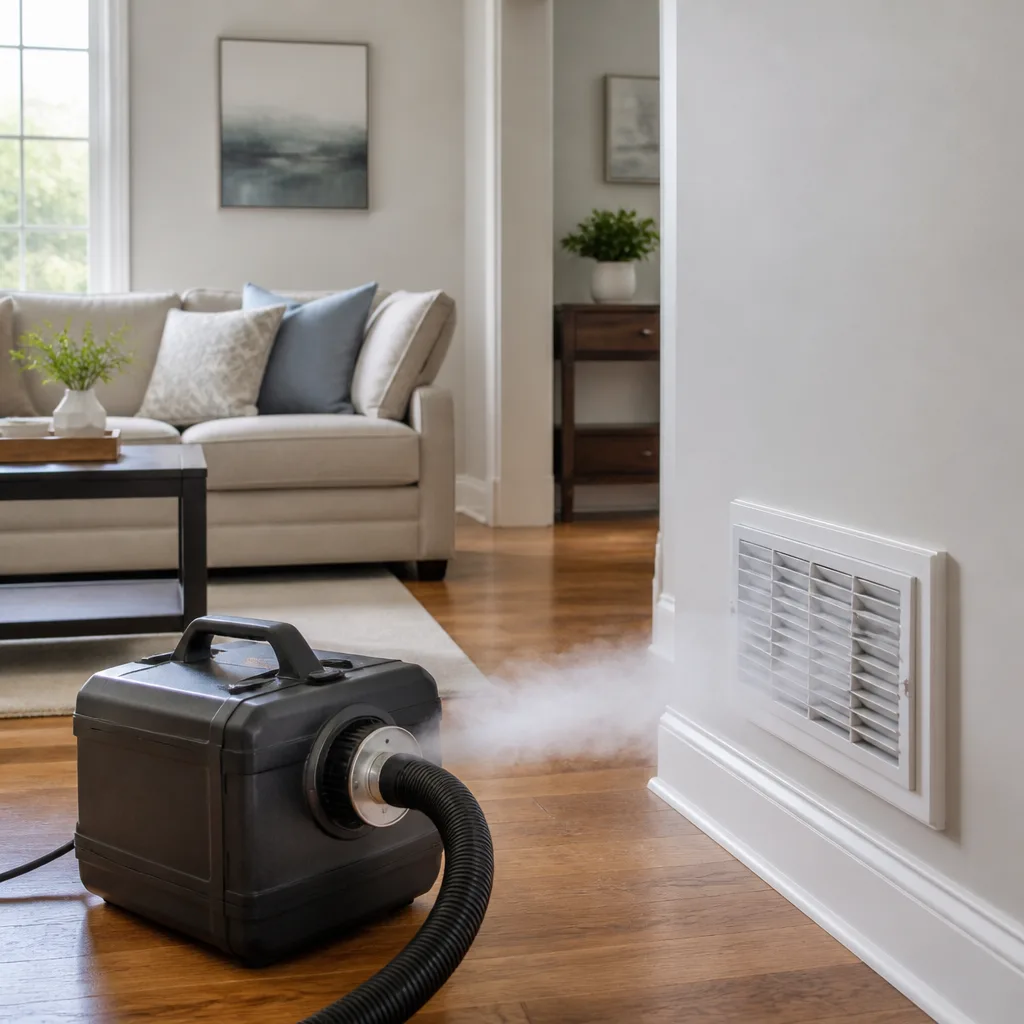 Sanitizing & deodorizing
Whole-system duct and dryer vent check with before-and-after photos - you see exactly what came out of your vents
That "$99 whole-house special" is a bait ad - the real number appears once they are in your hallway, or the "clean" is a shop-vac at the register. We photograph the inside of your ducts before and after instead.
Air Duct Cleaning Emergency Preparedness Guide for Waterbury Homes
After a basement flood, the first instinct is to dry the floor. Meanwhile, water wicking into floor-level return air ducts is creating a mold-growth timeline that starts within 48 hours. That’s the part most emergency checklists miss: homeowners in Waterbury plan for generators, bottled water and sump pumps, but the duct system is where contamination actually enters living space after a flood, a fire or a rodent event. This guide covers the three emergency scenarios that call for immediate duct assessment, what to do in the first 24 hours (and what not to do), how the Mad River and Naugatuck River corridors raise the stakes for nearby neighborhoods, and why dryer vent integrity belongs on your storm-season checklist.
Quick Answer
In Waterbury, an emergency duct assessment is needed after any event that lets water, smoke or rodents into the duct system: basement flooding with floor-level returns, a house fire even when it stayed in the kitchen, and confirmed rodent intrusion in duct runs. In all three cases, stop running the HVAC system first, document conditions with photos, then book an inspection. A standard cleaning removes debris; an emergency inspection also checks for moisture, contamination spread and structural damage, and produces the written record your insurer will ask for.
Styles & brands we work with
- Whole-home duct cleaning
- Dryer vent cleaning
- Camera inspection
- Sanitizing & deodorizing
Table of Contents
- The Three Emergencies That Require Immediate Duct Assessment
- What to Do in the First 24 Hours (and What Not to Do)
- Waterbury’s Flood-Prone Corridors and Duct Exposure
- Emergency Duct Inspection vs. Standard Cleaning
- Why the Inspection Report Matters for Your Insurance Claim
- Dryer Vent Integrity During Storm Recovery
- The Recovery Timeline: What Happens After the Assessment
- Preparing Your Duct System Before the Next Event
The Three Emergencies That Require Immediate Duct Assessment
Not every home event touches your ducts. Three specific scenarios do, and each one has a narrow window before contamination spreads further into the system and the living space.
1. Basement flooding with floor-level return air ducts
Waterbury has a lot of older housing stock with basements, and many of those basements hold return air ducts or supply trunks running low along the floor joists. When water enters, it doesn’t just pool on the slab. It wicks up into duct insulation and eventually into the duct interior itself. Fiberglass duct board and insulated flex duct both hold moisture, and once they’re wet, they stay wet. The mold-growth clock starts fast, so the goal in a flood event is assessment before the system runs again, not after the smell shows up.
2. A house fire, even a contained kitchen fire
Smoke travels through a duct system the way it travels through a chimney: the pressure differences in a house push it everywhere. A kitchen fire that got put out quickly can still leave soot and smoke residue inside supply runs across the house. The residue is acidic and it’s a respiratory irritant, and standard surface wiping in the kitchen won’t touch it. Fire restoration contractors handle the rooms; the ducts are a separate job that too often gets skipped.
3. Confirmed rodent intrusion in duct runs
Rodents in a home are common in Waterbury’s older neighborhoods, but the problem for ducts isn’t just droppings. Rodents chew through flex duct, insulation and duct board to build nests, and they leave waste inside runs. That waste becomes airborne the moment the blower comes on. A single confirmed sighting inside a duct run warrants a full assessment, not a spot treatment.
In all three scenarios, the sequence matters more than the speed. Skip ahead to the next section for the first 24-hour playbook.
What to Do in the First 24 Hours (and What Not to Do)
The single most common mistake after a flood or fire is turning the HVAC system back on to “dry things out” or “see if it’s working.” Running the system pulls contaminated air through every duct in the house and deposits moisture and particulates in places you can’t see. Don’t do it. Here’s what to do instead.
After a basement flood
- Shut off the HVAC system at the thermostat and, if you can safely reach it, at the breaker. If the breaker panel is in the flooded area, don’t touch it. Call an electrician first.
- Photograph everything before you move it. Water lines on the ducts, standing water depth, insulation condition. Wide shots and close-ups.
- Stop the water source and get standing water out. Pumps and wet vacuums are fine. This is about the floor, not the ducts.
- Run dehumidifiers and fans in the basement only if the space is safe and dry of standing water. Keep airflow moving in the basement, not through the ducts.
- Book a duct assessment. Tell the scheduler you flooded, whether returns are at floor level, and roughly how high the water got.
After a house fire
- Do not run the HVAC system, even if the fire was contained. The blower will spread soot and smoke residue through clean rooms.
- Don’t wipe soot with household cleaners. Dry soot smears and etches; leave the cleanup to the restoration contractor and note the duct system as a separate scope item.
- Photograph rooms nearest to the fire and any visible soot at registers. Insurance will want this.
- Ask the restoration contractor to explicitly exclude or include ducts in their scope. Don’t assume. Many restoration jobs close out without ducts ever being inspected.
- Book a duct inspection once the fire department has released the property.
After rodent intrusion
- Do not run the system if you find droppings in a register boot or inside a run.
- Handle removal first. Trapping and exclusion come before cleaning, or the ducts will be recontaminated within days.
- Photograph droppings, chewed insulation, nesting material and damaged flex.
- Book an inspection that includes a repair scope. Chewed duct runs need to be repaired, not just cleaned.
The full run of duct cleaning Waterbury services covers all three of these scenarios, including the repair work.
Waterbury’s Flood-Prone Corridors and Duct Exposure
Waterbury’s geography makes flooding a recurring concern rather than a freak event. The Mad River and Naugatuck River corridors drain a wide portion of the city, and low-lying neighborhoods near those corridors historically see more water events than higher ground. Properties near those corridors, and properties with basements in the older blocks around them, carry above-average emergency duct exposure. The reason is simple: floor-level returns sit in the part of the home most likely to flood, and older homes are more likely to have them.
Beyond the corridors, Waterbury gets the same heavy rain events the rest of New England gets, and a lot of the city’s housing was built when basement ductwork was standard practice. A wet fall followed by a hard freeze, then a fast thaw, is a pattern that pushes water into basements through failed grading and window wells. Add the older housing stock on tight lots with mature trees, and you get the two things that drive emergency duct calls: water intrusion and rodent intrusion.
What this means for your prep
- If your home is near the Mad River or Naugatuck River corridors, or if you’ve ever had even an inch of water in the basement, treat floor-level return ducts as a known exposure.
- If you’re in an older Waterbury block with mature trees close to the roofline, rodent intrusion into duct runs is a realistic scenario, not a remote one.
- If your home has had a sump pump fail once, it can fail again. Duct assessment belongs in the plan.
Emergency Duct Inspection vs. Standard Cleaning
A standard air duct cleaning is a scheduled job. An emergency inspection is a diagnostic job with a different scope. If you’re booking after a flood, fire or rodent event, you want the second one.
| What’s covered | Standard cleaning | Emergency inspection |
|---|---|---|
| Debris removal from runs and registers | Yes | Yes |
| Pre-clean photo documentation | Standard | Detailed, including moisture and contamination indicators |
| Moisture check in duct insulation and duct board | No | Yes |
| Smoke and soot residue assessment | No | Yes |
| Rodent damage assessment | No | Yes |
| Structural duct damage report | No | Yes |
| Written report for insurance | Not typically | Yes |
| Containment protocol for contamination | Standard | Full containment setup |
Containment is the difference between a proper emergency job and a bad one. We use Abatement Technologies filtration equipment to establish negative pressure and contain contamination before we move it. That’s the part that keeps a duct assessment from turning into a house-wide dust event. Any contractor who shows up for a post-flood or post-fire assessment without containment equipment should not be running your system for testing.
Why the Inspection Report Matters for Your Insurance Claim
Insurers pay for what’s documented. After a flood, fire or rodent event, the duct system is often the last item on a claim because nobody thought to include it. A proper inspection report closes that gap. It should include before-and-after photos of the duct interior, a written description of conditions found, a moisture assessment if relevant, and a scope of recommended work. Your adjuster can use that report to approve or deny the duct portion of a claim. Without it, the duct work falls into the “unsubstantiated” pile.
Two practical notes. First, tell your insurer about the duct scope in writing, not over the phone, so there’s a record. Second, ask for the inspection report to reflect what was actually found, not a generic summary. Waterbury homes vary a lot by age and construction, and a report that just says “ducts need cleaning” isn’t going to move a claim forward. A report that says “return duct insulation in the basement shows visible water staining up to six inches” is.
For property managers handling multiple units in Waterbury, the same documentation approach applies per unit. A written report per unit is worth the extra step when a claim covers several buildings.
Dryer Vent Integrity During Storm Recovery
A clogged or damaged dryer vent is an active fire risk. That risk gets worse during storm recovery, when power comes back on and people run dryers full of soaked towels and bedding. Lint load goes up, dryer run times go up, and any preexisting blockage in the vent line becomes a hot spot. If a storm has knocked a vent hood loose or pushed debris into the exterior termination, that’s an added restriction on an already risky line.
Before you run the dryer for the first storm-recovery load:
- Look at the exterior vent hood. It should be intact, clear and flapping freely when the dryer runs.
- Check the vent run inside the house for crushed flex, kinks behind the dryer, or visible lint accumulation.
- Look for any sign of scorching or discoloration on the vent line or at the dryer connection.
- If the dryer has been taking longer than usual to dry a load, or clothes come out hotter than before, stop using it until the vent is inspected.
Professional dryer vent cleaning clears the line end to end, checks the termination, and flags anything that needs repair. It’s the fastest way to close this particular risk off your recovery checklist.
The Recovery Timeline: What Happens After the Assessment
Once the assessment is done, the work tends to follow a predictable sequence. Here’s the general shape of it, whether the event was a flood, a fire or a rodent intrusion.
- Day 1 – Assessment and containment. The system is inspected with containment in place. Findings are documented with photos and a written scope.
- Day 1-2 – Cleaning. Duct runs, registers, boots and the air handler connection get cleaned. For fire jobs, soot residue removal is the priority. For flood jobs, contaminated insulation and any duct board that can’t be dried get identified for replacement.
- Day 2-3 – Repair scope. Damaged flex, duct board, and boots get repaired or replaced. This is a standalone service for us, not a referral to another contractor.
- Day 3+ – Moisture verification. For flood jobs, the system is checked again for moisture before it goes back into service.
- Follow-on – Air quality upgrade. If the home needs better filtration going forward, whole-home filtration upgrades can be discussed at the same visit.
We work with Honeywell and Aprilaire product lines for post-cleaning air-quality upgrades, which means the filtration conversation happens in the same appointment as the cleaning and repair, not in a separate one weeks later.
Preparing Your Duct System Before the Next Event
Emergency preparedness for ducts is mostly about knowing your system before something goes wrong. A few proactive steps lower your exposure to all three emergency scenarios.
- Locate your floor-level returns now. Know where they are in the basement. If you ever flood, you’ll know immediately whether the system is exposed.
- Keep the HVAC breaker labeled and accessible. In a flood, the fastest way to stop the problem from spreading is to shut the system off.
- Have your ducts cleaned on a reasonable schedule. Cleaner ducts mean less debris to become mold food and less material for rodents to nest in.
- Inspect your dryer vent annually. A clean, intact vent line is a fire-safety item, not a convenience item.
- Watch for rodent signs in the basement and attic. Chewed insulation around duct runs, droppings near register boots, and scratching sounds in the walls are all early warnings.
- Keep a simple emergency file. Photos of your duct layout, your HVAC breaker location, and any past duct service records. It saves time when you’re on the phone with an insurer.
Common Mistakes to Avoid
- Running the HVAC system to “dry out” a flooded basement. It pulls moisture and contamination through every duct in the house. Shut the system off first.
- Assuming a contained kitchen fire didn’t reach the ducts. Smoke travels through the whole system. Soot residue in supply runs is standard after even a small fire.
- Cleaning ducts before removing rodents. If the rodents aren’t excluded first, the ducts get recontaminated within days. Trap and seal first.
- Booking an emergency clean without containment equipment. A shop vac and a leaf blower don’t contain contamination; they spread it. Ask what equipment will be on site.
- Letting a restoration contractor close out without a duct scope. Many restoration jobs finish without the duct system ever being inspected, and the insurer won’t cover what wasn’t documented.
- Skipping the dryer vent after a storm. Power restoration plus a lint-loaded vent line is a fire condition. Check the vent before the first recovery load.
- Relying on a general handyman for post-event duct work. Duct repair after flood, fire or rodent damage is a specialist scope. A generalist will clean and refer the repair elsewhere.
See the difference
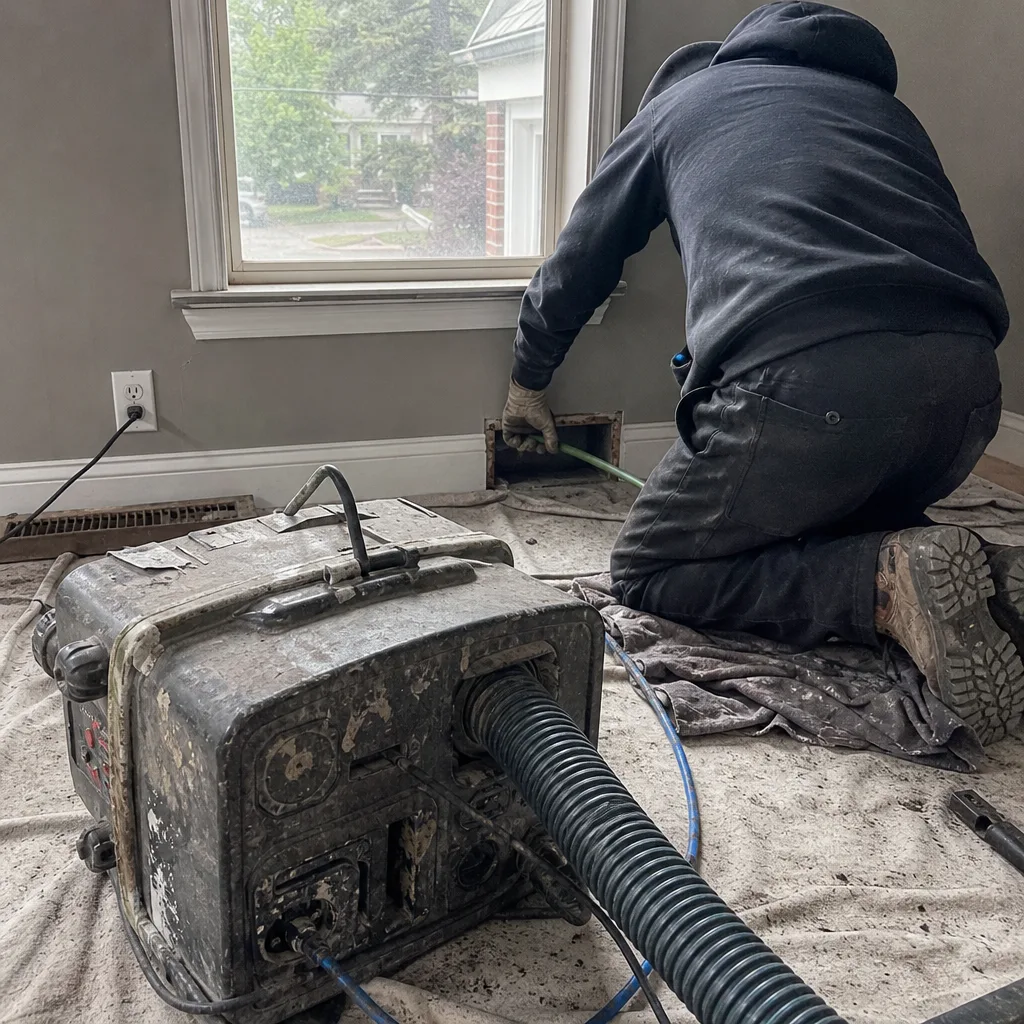 Before
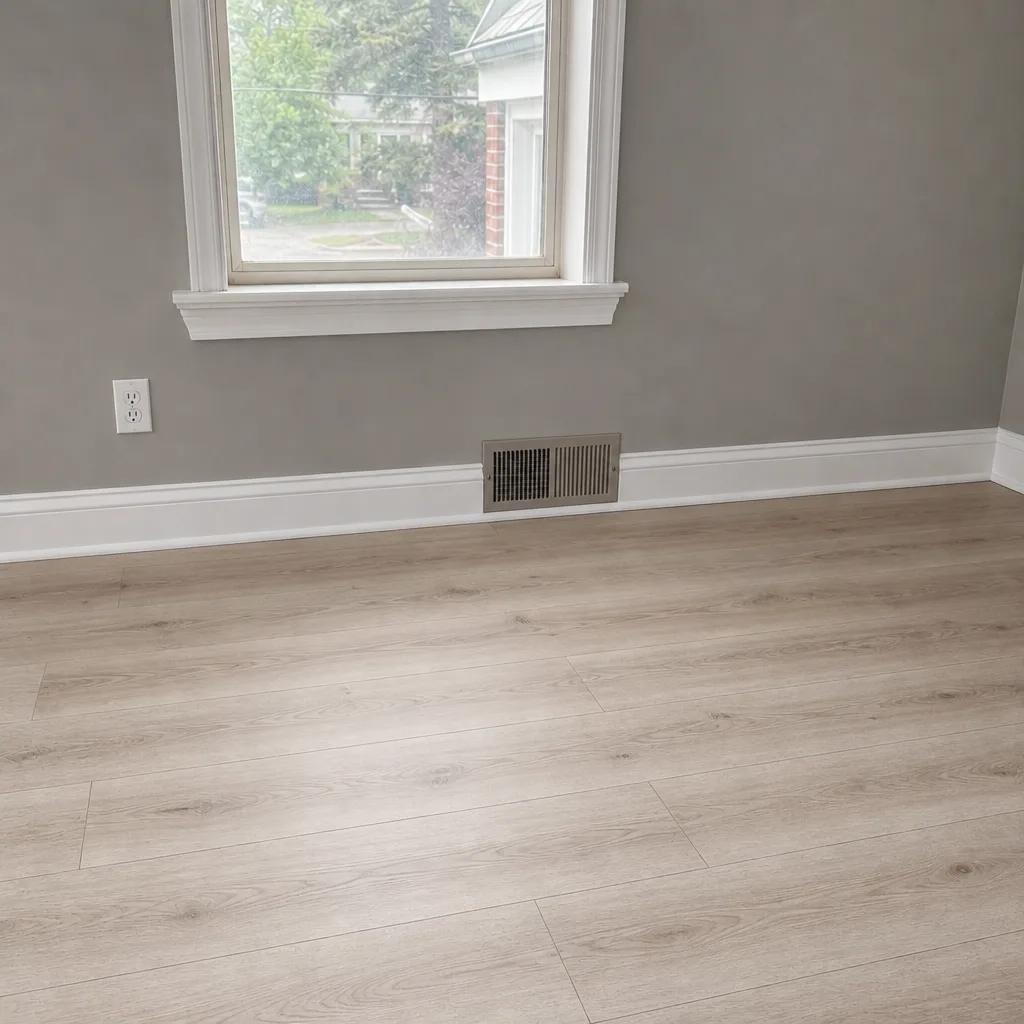 After
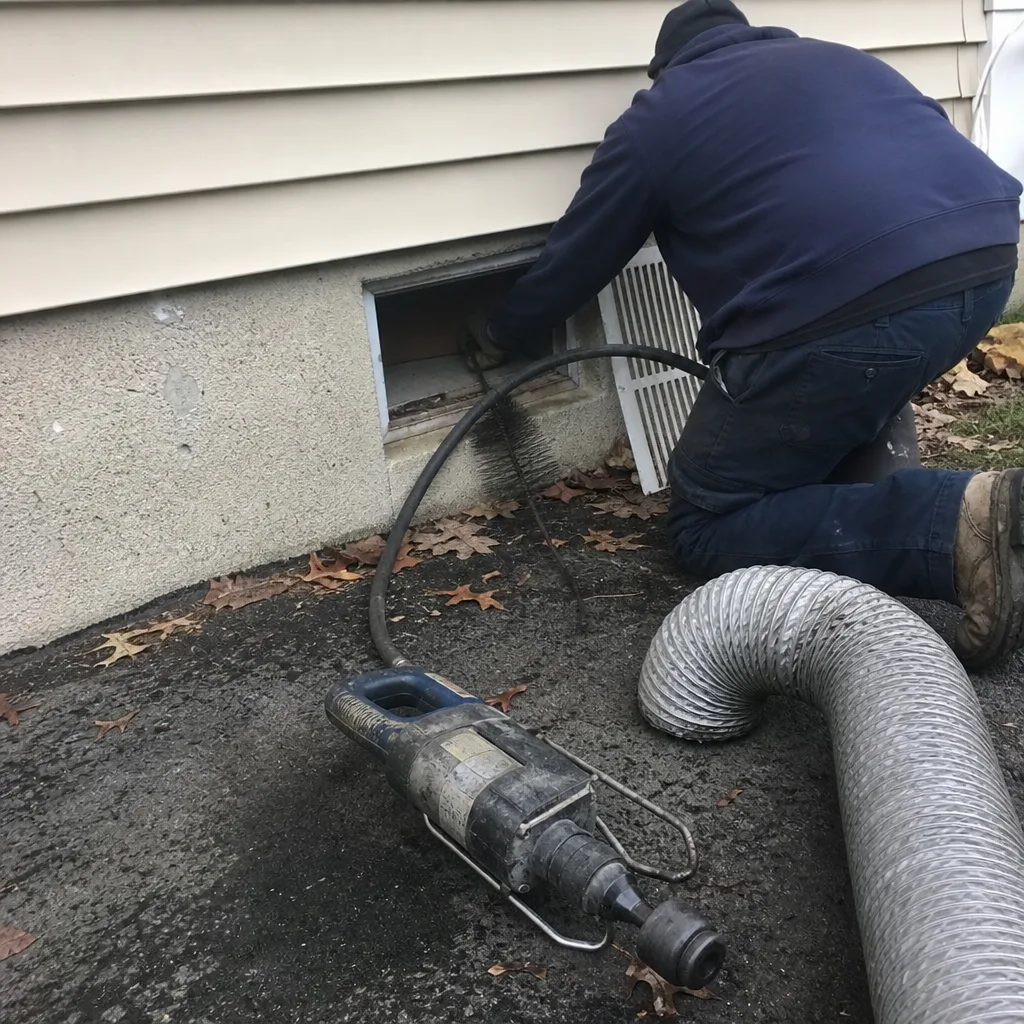 Before
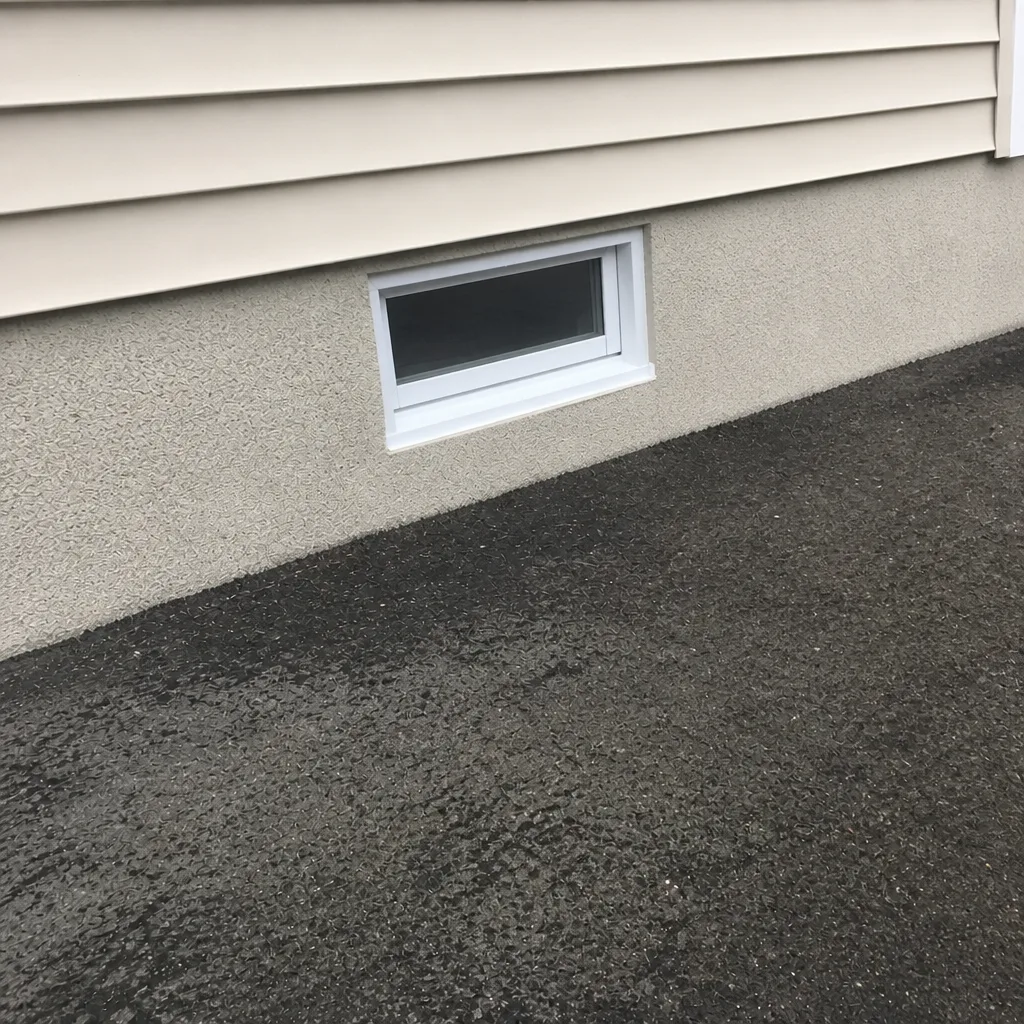 After
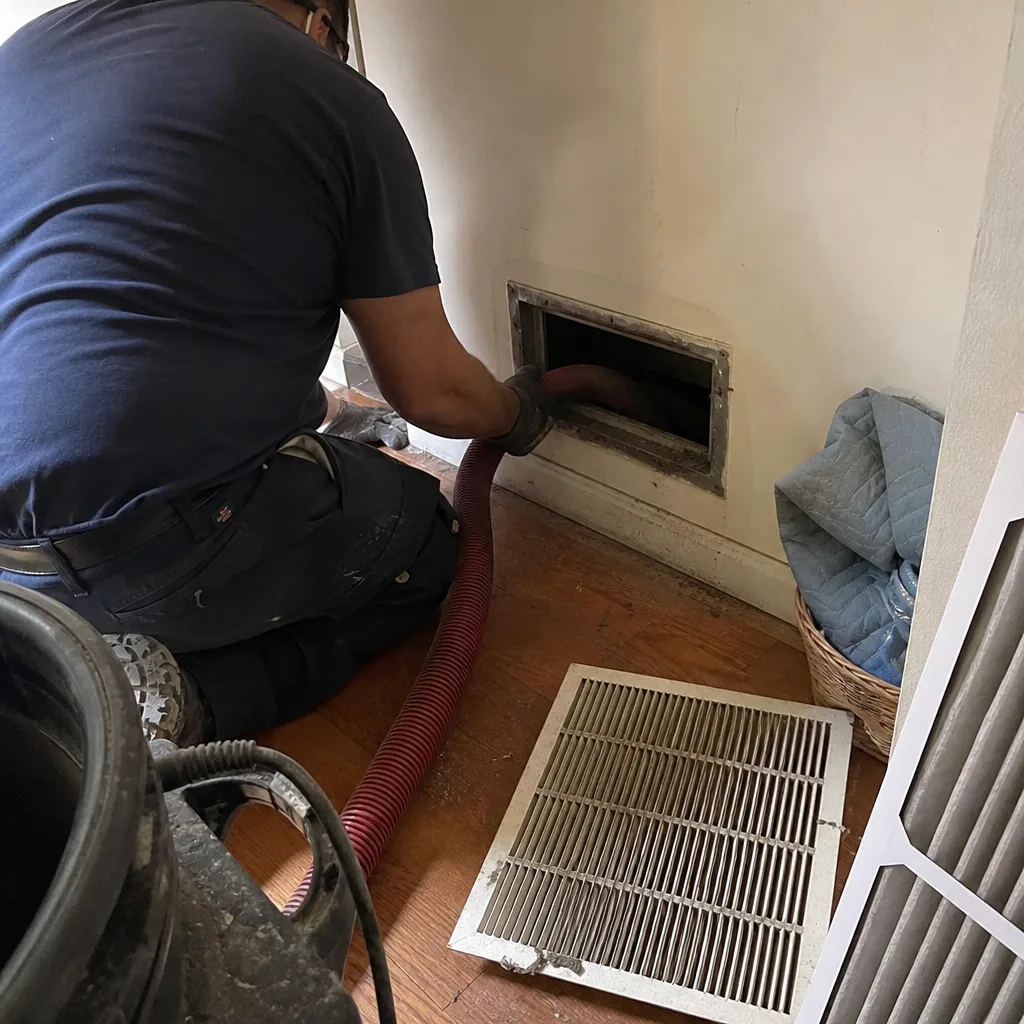 Before
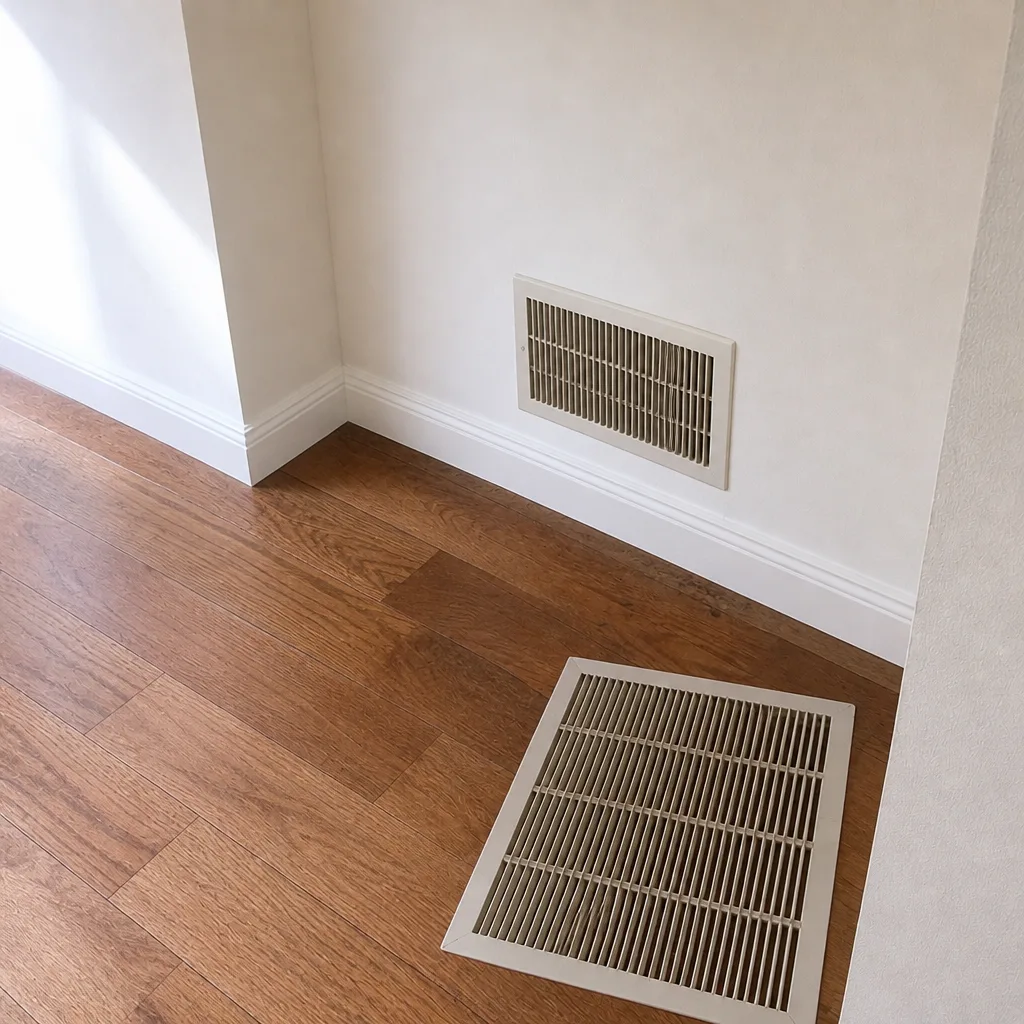 After
When to Call a Professional
Call a duct specialist any time water, smoke or rodents have been in your duct system. Specifically: after any basement flood that reached or came near floor-level returns, after a house fire of any size, after confirmed rodent activity in duct runs, and any time your dryer starts taking noticeably longer to dry a load. If you’ve had a storm event and your system hasn’t been assessed since, that’s also a call. Our technicians have up to 9 years of experience with these kinds of inspections, and we use Rotobrush and Nikro equipment because the work doesn’t go well with consumer-grade tools. Duct Cleaning Waterbury offers free estimates in Waterbury; call (844) 619-2446 to book an assessment.
Frequently Asked Questions
As soon as possible, and before the HVAC system runs again. Mold growth can begin within 48 hours of moisture reaching duct insulation or duct board, so the assessment window is short. Call (844) 619-2446 for an exact quote; estimates are free. We answer 24/7, and fast dispatch runs from 7am to 7pm, Sunday through Friday.
Emergency duct work is priced per job by written estimate, not by the vent or by a teaser figure, and the written estimate sets the final price. The scope varies widely depending on whether the event was a flood, fire or rodent intrusion, whether repairs are needed, and what containment the job requires. Call (844) 619-2446 for an exact quote; estimates are free.
Cheap quotes usually reflect cheaper equipment and a smaller scope. A shop vac and a blower will spread contamination through a house; professional systems like Rotobrush and Nikro remove it, and proper containment with Abatement Technologies equipment keeps it contained. A low quote that skips containment, documentation and repair isn’t a lower price for the same job; it’s a smaller job. Call (844) 619-2446 for a written scope and estimate.
You get before-and-after photos of your own ducts. That’s the standard, and it’s the single best defense against the bait-and-switch reputation this trade has earned. Ask any contractor upfront whether they’ll document the work with photos. Call (844) 619-2446 for an exact quote; estimates are free.
Often yes, if the duct work is documented and tied to the covered event. That’s why the written inspection report matters: it gives your adjuster something to work with. Submit the report in writing rather than describing it over the phone. We can produce the documentation; the coverage decision is between you and your insurer.
Yes, before the first post-storm dryer load. Power restoration plus a lint-loaded vent line is a fire condition, and storm debris or a loose exterior hood can make an existing restriction worse. Have the line checked if you have any doubt. Call (844) 619-2446 for a dryer vent inspection and estimate.
The Bottom Line
Emergency preparedness for a Waterbury home isn’t just a generator and a case of water. It’s knowing where your floor-level returns sit, knowing how to shut your HVAC system off, and knowing that flood, fire and rodent events all warrant a duct assessment before the system runs again. The three most common mistakes are running the system to dry it out, assuming a small fire stayed in the room it started in, and letting a restoration job close out without a duct scope. A proper assessment produces documentation your insurer can actually use, and the right equipment keeps contamination contained instead of spread. If you’ve been through any of these scenarios and haven’t had your ducts looked at, that’s the call to make.
Call (844) 619-2446 for a free estimate. We answer 24/7. Fast dispatch from 7am to 7pm, Sunday through Friday. Duct Cleaning Waterbury works on duct systems only: cleaning, dryer vent safety and duct repair under one call, with professional-grade Rotobrush and Nikro equipment and Abatement Technologies containment on every emergency job.
Written by the team at Duct Cleaning Waterbury.