
Last updated November 16, 2026
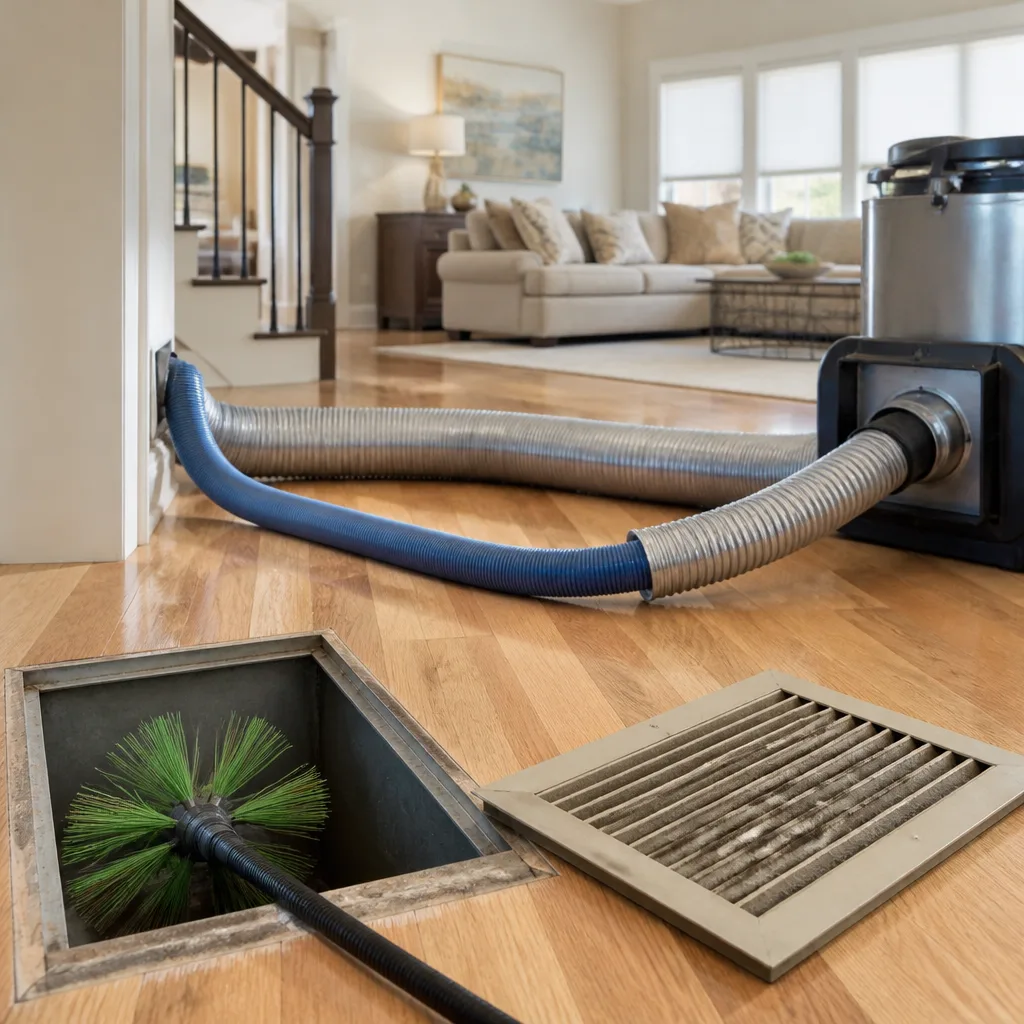 Whole-home duct cleaning
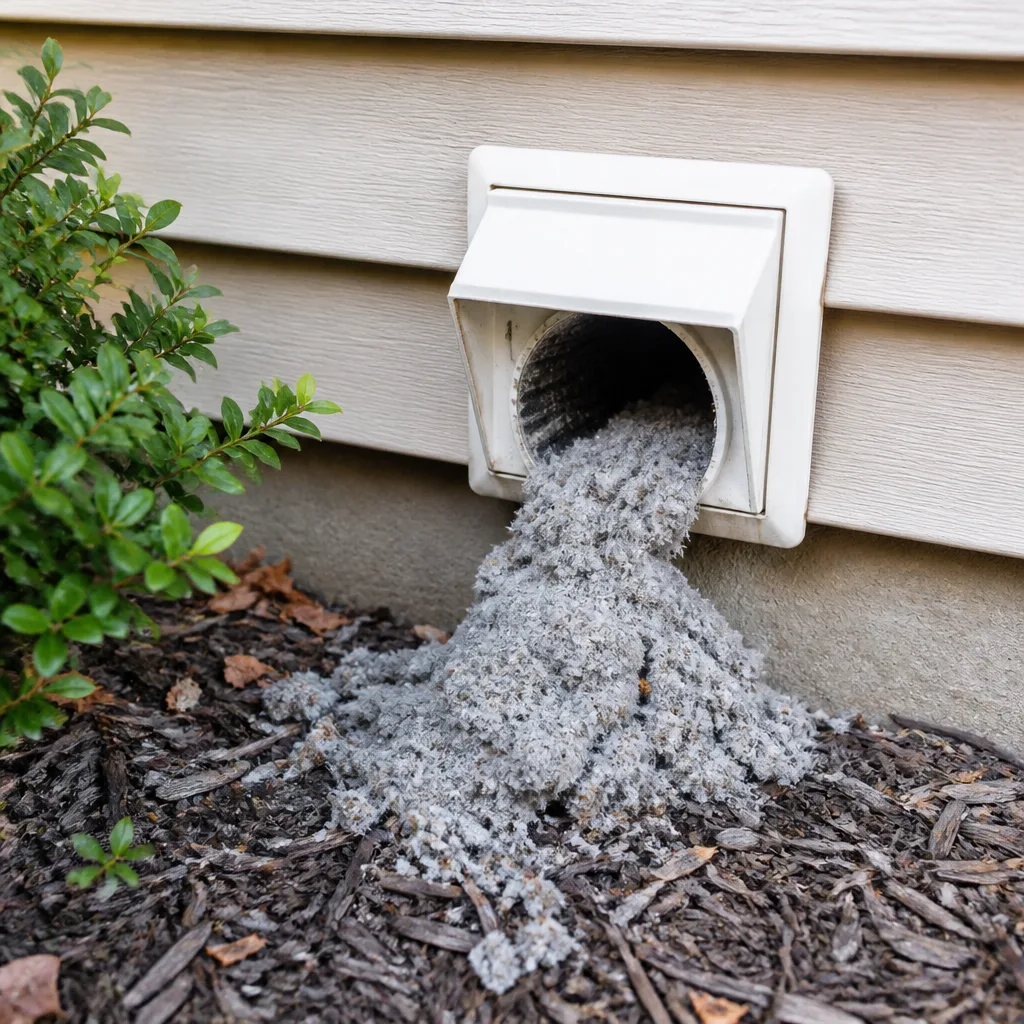 Dryer vent cleaning
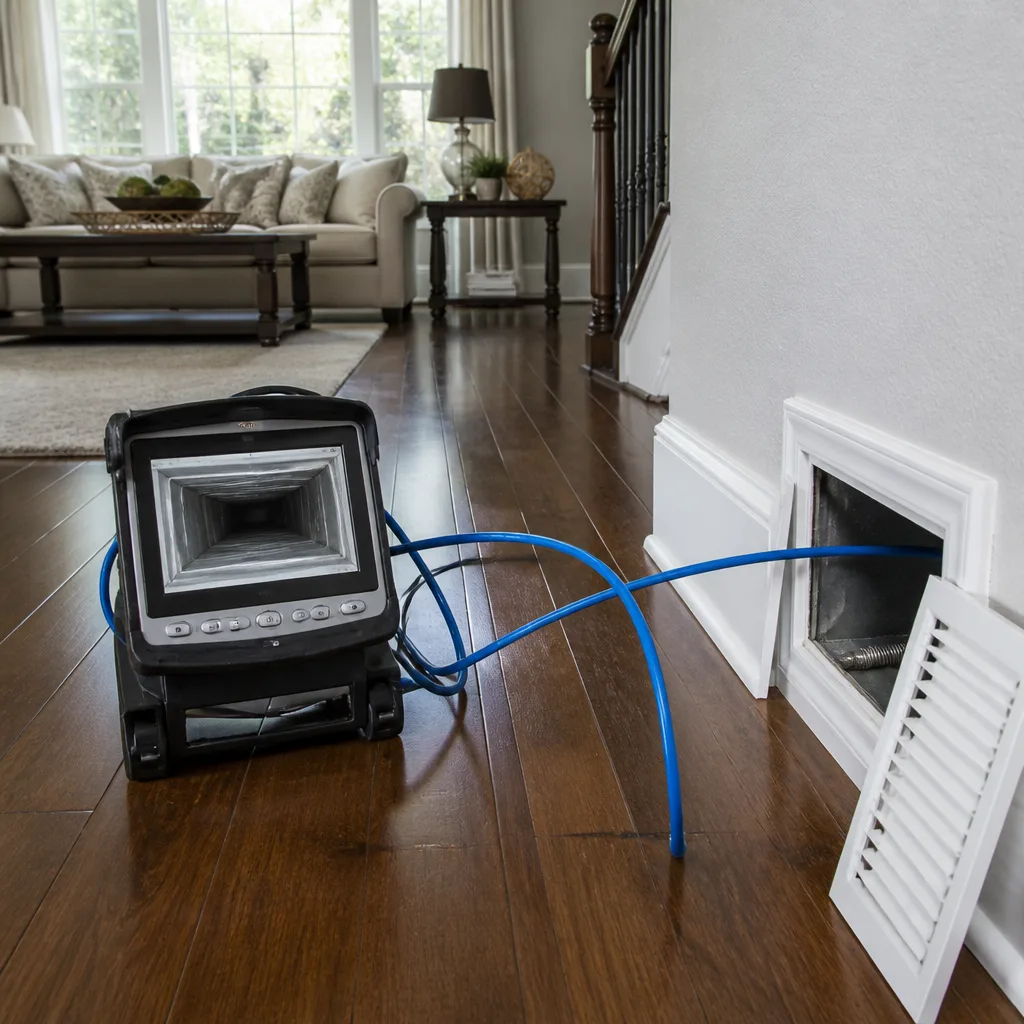 Camera inspection
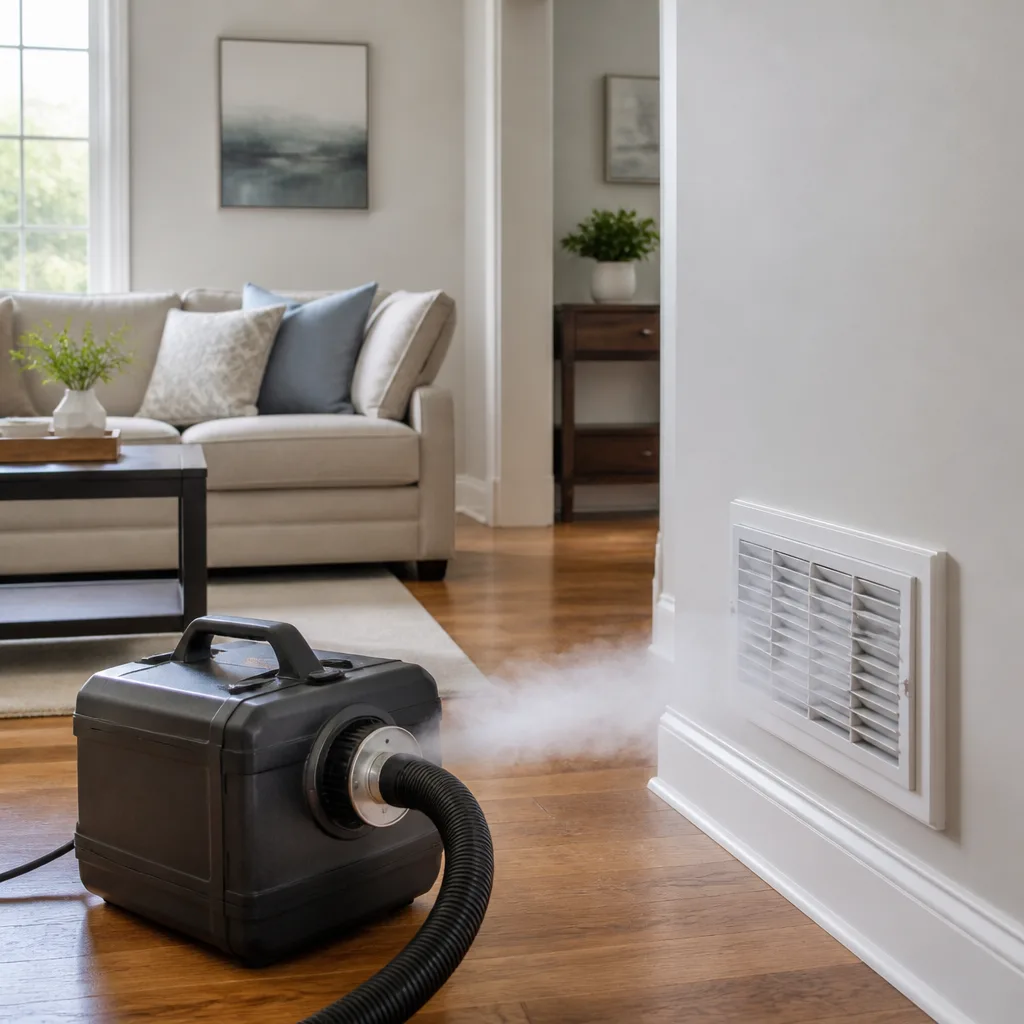 Sanitizing & deodorizing
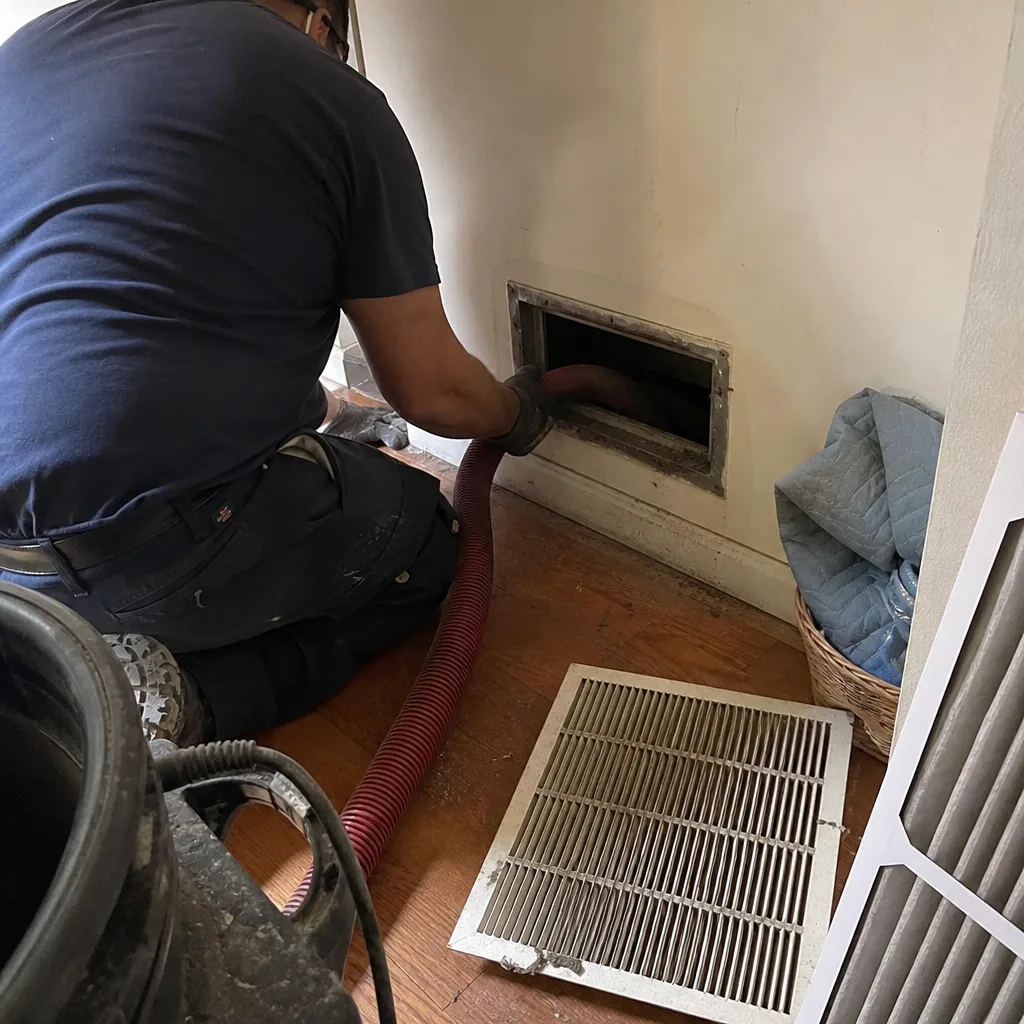
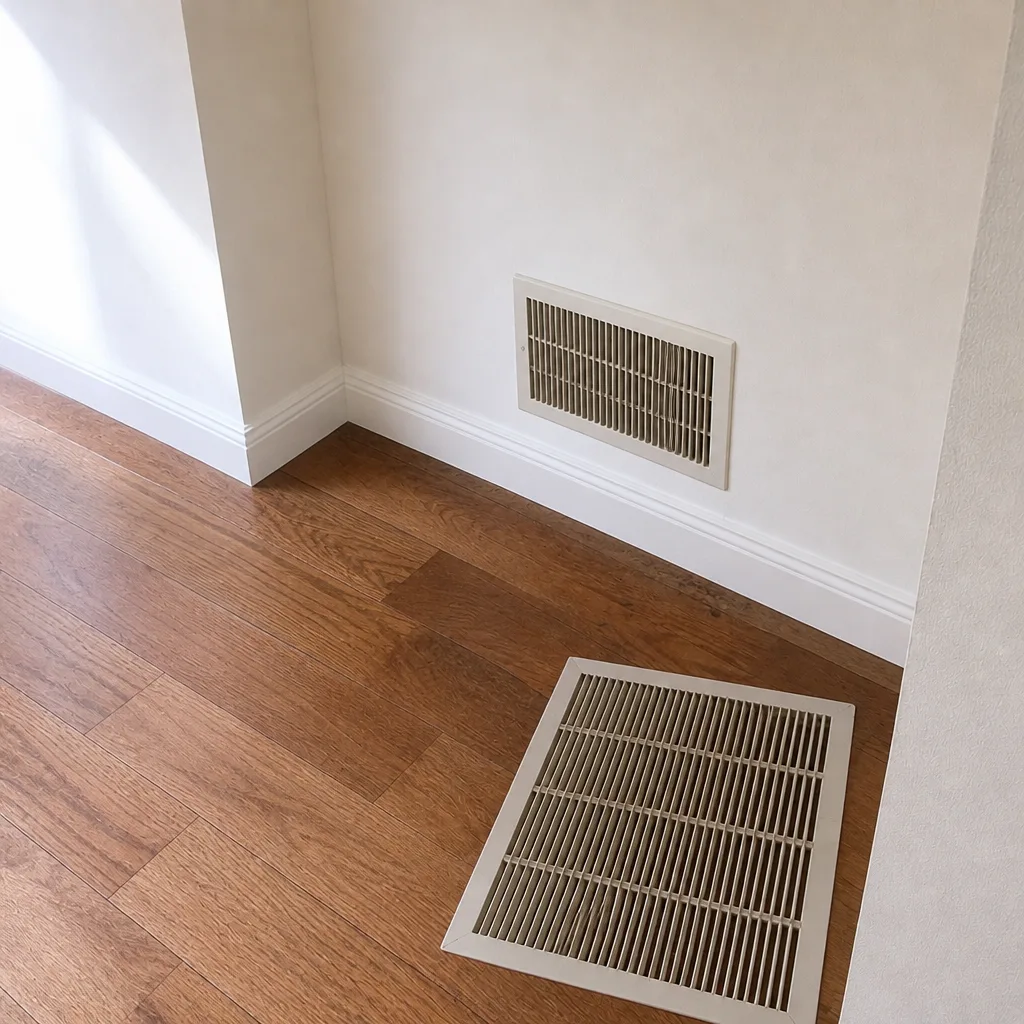
Whole-system duct and dryer vent check with before-and-after photos - you see exactly what came out of your vents
That "$99 whole-house special" is a bait ad - the real number appears once they are in your hallway, or the "clean" is a shop-vac at the register. We photograph the inside of your ducts before and after instead.
The Complete Guide to Air Duct Cleaning in Waterbury
A shop vac pulls roughly a tenth of the suction that contractor-grade negative-pressure equipment generates. That gap is the whole story of this trade, and it’s why two duct cleanings that look identical on an invoice can do completely different things to your air. We’re not going to sell you on cleaning your ducts in this guide. We’re going to show you what a real, full-system mechanical clean involves, how a Waterbury home’s duct layout actually works, and how to spot the difference between a specialist and someone who bought a vacuum at a hardware store. By the end you’ll know what a written scope should say, which omissions are red flags, and why the housing stock in Waterbury changes the job.
Quick Answer
A professional air duct cleaning in Waterbury is a full mechanical cleaning of the entire system – supply lines, return lines, the main trunk, plenums, registers, and the air handler compartment – done with contractor-grade equipment under negative pressure so debris is captured, not just loosened. It’s a scheduled job, quoted as one flat price per system with a written scope agreed before work starts. If a company can’t show you the equipment, can’t show you before-and-after photos of your own ducts, or quotes per vent, that’s not a full mechanical clean.
Styles & brands we work with
- Whole-home duct cleaning
- Dryer vent cleaning
- Camera inspection
- Sanitizing & deodorizing
Table of Contents
- What Contractor-Grade Equipment Does That Portable Vacuums Can’t
- Anatomy of a Waterbury Duct System
- Surface Clean vs. Full Mechanical Clean
- Older Waterbury Housing and Its Debris Profiles
- What a Legitimate Written Scope of Work Looks Like
- What Actually Happens During a Professional Cleaning
- What Air Duct Cleaning Costs in Waterbury
- Common Mistakes to Avoid
- When to Call a Professional
- Frequently Asked Questions
What Contractor-Grade Equipment Does That Portable Vacuums Can’t
Airflow is the difference. A portable shop vacuum moves a small volume of air through a narrow hose and loses most of its pulling power the moment it’s connected to a long duct run. Contractor equipment is built to create sustained negative pressure across the whole system, so debris lifts off the duct walls and travels toward the collection point instead of settling back down a few feet away.
Two systems do most of this work in serious duct cleaning: the Rotobrush brush system and Nikro vacuum equipment. The Rotobrush sends a rotating brush head through the duct with a whip-like action that scrubs the interior walls of the supply lines, then captures what it loosens through a connected vacuum. Nikro equipment provides the high-capacity suction and collection that keeps the whole system under negative pressure while the brush works. Together they handle two problems a portable vacuum can’t: agitation of stuck-on debris, and containment of it once it’s airborne.
Containment is where a lot of jobs quietly fail. If the equipment loosens dust without sealing the system, that dust goes into the living space. Abatement Technologies air-filtration equipment is built for exactly this – capturing fine particulate at the work area and holding the system under negative pressure so the mess is contained before it’s moved. We work with Abatement Technologies gear for that reason. Cleaning ducts with anything less is closer to rearranging the problem.
Light-commercial and larger residential systems often have trunk runs long enough that suction decays with distance, and that’s a real test of the equipment. A generalist HVAC crew that cleans ducts as a sideline usually doesn’t carry the rig for it.
Anatomy of a Waterbury Duct System
Every duct system has two sides, and each side needs different technique. Understanding the layout of your own system makes you a much harder customer to mislead.
Supply lines carry conditioned air from the air handler out to the registers in each room. In most Waterbury homes these are smaller-diameter runs, often branching from a main trunk, and they’re the lines a rotating brush system like Rotobrush is designed for. Debris here tends to be fine dust, pet hair, and the settled particulate that builds on the bottom inner wall of the duct.
Return lines pull air back to the air handler. They’re larger, they carry more volume, and they’re usually where the heaviest accumulation sits – especially at the return grille and the first few feet behind it. Returns need high-volume suction more than aggressive brushing, which is why a full job uses different equipment and different technique on each side.
The plenum is the box-shaped transition between the air handler and the duct system – one on the supply side, one on the return side. Plenums are frequently skipped by low-effort cleaners because they’re awkward to reach, and they’re often where debris collects most densely. A scope of work that omits the plenums isn’t cleaning the system; it’s cleaning the parts you can see.
Registers and grilles are the visible endpoints. They need to come off, be cleaned individually, and go back on. If nobody removes them, the room-side dust never actually leaves the system.
The air handler compartment is the area around the blower and coil. This is a duct-system cleaning job’s outer boundary – we clean the compartment and the ductwork around it, not the mechanical components themselves. That distinction matters because some companies sell “duct and furnace cleaning” as the same thing. It isn’t, and a duct specialist knows where the line is.
Surface Clean vs. Full Mechanical Clean
A surface clean removes what’s loose and visible. A full mechanical clean contacts the duct walls, agitates what’s bonded to them, and removes it under containment. The two jobs can take a similar amount of time and produce very different results, which is why you need to know how to check.
Here’s how to tell them apart:
- Before-and-after photos of your own ducts. Not stock photos, not a video of someone else’s system. A professional scope should include visual documentation of the inside of your ducts before and after cleaning, shown to you.
- Airflow before and after. You should be able to feel the difference at the registers in rooms that were previously weak. Stronger, more even airflow across rooms is the practical test most homeowners can run themselves.
- The equipment on site. A brush system and a high-capacity vacuum rig take up space. If the equipment in your driveway fits in a hatchback and runs off a standard wall outlet, you’re getting a surface clean or something close to it.
- A written scope before work starts. A legitimate crew tells you what will be cleaned – registers, main trunk, branch lines, both plenums, air handler compartment – before they touch anything.
- Containment set up first. Filtered units and negative-pressure setup should be running before the first register comes off.
Older Waterbury Housing and Its Debris Profiles
Waterbury’s housing stock includes a lot of pre-1970 construction, and that changes what comes out of the ducts. Two debris profiles show up repeatedly in homes of that era, and each one changes the cleaning protocol.
Fiberglass insulation shed. Older ductwork was often lined internally with fiberglass, or run through attic and crawl spaces where insulation sits close to leaky duct joints. Over time, fiberglass fibers shed and settle into the system, mixing with household dust. Aggressive brushing is the wrong tool on degrading internal duct liner – it can tear it loose. The right approach is controlled agitation and inspection, and if the liner is compromised, that’s a duct repair conversation, not a cleaning one. This is one of the reasons duct cleaning and duct repair belong with the same specialist.
Vermiculite risk. Vermiculite insulation was used in some older homes and can contain asbestos. This is not something to guess about. If you know or suspect vermiculite is present in your home – typically in attic and wall cavities feeding into duct runs – tell the company before anyone starts, and consider testing before any work disturbs the material. Duct cleaners who don’t ask about the age of the home and its insulation are showing you they’ve never hit the problem. A crew that works in Waterbury’s older neighborhoods should be asking you that question on the phone.
Add Connecticut’s humid summers and cold, dry winters and the seasonal swing matters too. Condensation forms on cool duct surfaces during humid stretches, and damp dust behaves differently than dry dust – it clings, it can support microbial growth, and it’s harder to lift with suction alone. Cleaning in a damp system is a different job than cleaning in a dry one.
What a Legitimate Written Scope of Work Looks Like
A written scope is your protection. It’s what turns “we’ll clean your ducts” into an actual commitment you can measure the work against. Any reputable duct cleaning company should be willing to put this in writing before the appointment, and quote one flat price for the system.
A complete scope covers:
- All supply registers and branch runs – removed, cleaned, reinstalled
- All return grilles and return runs – including the first several feet behind each grille
- The main trunk line on both supply and return
- Both plenums – supply-side and return-side
- The air handler compartment – cleaned around the blower and coil area
- Containment setup – what filtration and negative-pressure equipment will be used
- Before-and-after documentation – photos of your own system, shown to you
- A single flat price for the whole system – not per vent, not per register
Red flags in a scope or a quote:
- Pricing per vent or per register instead of per system
- No mention of the plenums or the air handler compartment
- No containment or filtration mentioned at all
- No written documentation commitment
- A teaser price that “may adjust” once the technician is on site
- An upsell to a chemical treatment or a sealant before anyone has even looked inside
The bait-and-switch reputation of this trade exists for a reason: a low advertised price that grows once the technician is in your home. The honest counter to that is one flat price per system, agreed before work starts, with no per-vent pricing and before-and-after photos of the ducts that were actually cleaned. Ask for exactly that and you’ll sort the specialists from the salespeople in one phone call.
What Actually Happens During a Professional Cleaning
Understanding the sequence helps you know whether the crew is doing the job properly, and it’s the same general process whether you’re in a ranch off Bucks Hill or a two-family in the North End. It runs like this:
- Walkthrough and confirmation. The technician walks the system with you, confirms the written scope, and notes any obvious duct damage or suspect insulation before starting.
- Containment setup. Air-filtration equipment is positioned and negative pressure established at the work area. This happens before any debris is disturbed.
- Register and grille removal. Supply and return registers come off and are cleaned separately.
- Source vacuum connection. High-capacity vacuum equipment (Nikro, in our case) connects to the system to hold it under negative pressure throughout.
- Mechanical agitation of the supply lines. A rotating brush system (Rotobrush, in our case) travels the supply runs, scrubbing the inner walls and driving loosened debris toward the collection point.
- Return-side and trunk cleaning. Larger return runs and the main trunk are cleaned with high-volume suction and mechanical agitation suited to their size.
- Plenum and air handler compartment. Both plenums and the compartment around the blower and coil are cleaned.
- Documentation. Before-and-after photos of the ducts, shown to you, plus a walkthrough of what was found.
If the home has air-quality upgrades planned – a whole-home filter or a humidifier – that can be discussed at the same appointment since we work with Honeywell and Aprilaire product lines. But the cleaning comes first. Recommending equipment before the ducts are clean is backwards.
What Air Duct Cleaning Costs in Waterbury
Duct cleaning is priced per system, not per vent, and the final price is set by the written estimate for your specific home. What drives the estimate is system size, how many branches and returns there are, accessibility, and how much debris has accumulated. A single-story ranch and a two-family with two systems are not the same job.
Here’s what to expect from a quote and how to read it:
| Line item | What it means |
|---|---|
| Whole-system cleaning | One flat price covering supply, return, trunk, both plenums, and the air handler compartment |
| Additional system | A second, separate system (common in two-family homes) is quoted as its own price |
| Air duct repair | If damage or disconnected ductwork is found, repair is quoted as a separate, standalone service |
| Dryer vent cleaning | A separate service from air duct cleaning, quoted on its own |
We don’t quote per-vent prices or teaser coupon figures, because those numbers are designed to get a foot in the door and then grow. Call Duct Cleaning Waterbury for a free estimate and you’ll get one flat price for the system, written down before anything starts. The written estimate sets the final price.
For comparison purposes, it helps to know that the cheapest quote in a stack of five is almost always the one with the most exclusions – no plenums, no containment, no documentation. Ask every company what’s included and compare scopes, not just totals.
Common Mistakes to Avoid
- Hiring on price alone. The lowest quote is usually the one with the shortest scope. Compare what’s included before you compare totals.
- Assuming a generalist HVAC company cleans ducts properly. Many do it as a sideline with portable equipment. A specialist built for duct work only is doing duct work all day, every day.
- Skipping the vermiculite question in a pre-1970 Waterbury home. If insulation in the attic or walls could contain asbestos, that needs to be identified before anyone disturbs the system.
- Accepting a per-vent price. It rewards the company for finding more vents and gives you no ceiling on the bill. One flat price per system is the fair structure.
- Not asking for before-and-after photos. Documentation is how you know the work was actually done. If a company won’t show it, assume it wasn’t.
- Cleaning ducts but ignoring the dryer vent. They’re separate systems and both need attention. A dryer that takes too long to dry a load is a dryer-vent warning sign that deserves its own appointment.
- Believing aggressive brushing is always safe. On older internally lined ductwork, the wrong agitation tears the liner loose. Damage found during cleaning should be fixed, not ignored.
When to Call a Professional
Duct cleaning isn’t a scheduled chore for every home, but certain signals mean it’s time to have the system looked at. Unexplained allergy flare-ups that get worse when the heating or cooling runs. A musty or dusty smell coming from the registers when the system kicks on. Visible dust streaks around the registers or on the ceiling near them. Rooms that never heat or cool evenly, which can point to disconnected or leaky duct runs. A dryer that needs two cycles to dry a load, which means the vent – a separate system – needs cleaning. And any home where the ducts haven’t been touched in a decade or more, especially older housing stock where fiberglass shed and insulation debris accumulate.
Duct Cleaning Waterbury offers free estimates in Waterbury – call (844) 619-2446. We answer 24/7. Fast dispatch from 7am to 7pm, Sunday through Friday.
Frequently Asked Questions
Duct cleaning in Waterbury is priced as one flat price per system, set by a free written estimate based on your system’s size, layout, and condition. It is not priced per vent, and the written estimate is the final price. Call (844) 619-2446 for an exact quote – estimates are free.
Most homes don’t need it on a fixed schedule. A reasonable rule is every few years for most homes, sooner if you have pets, allergies, recent renovation dust, or older ductwork with insulation shedding. Homes in Waterbury’s pre-1970 housing stock often benefit from an inspection sooner rather than later because debris profiles there are heavier. Call (844) 619-2446 for an exact quote – estimates are free.
Cheaper quotes usually exclude the plenums, the air handler compartment, containment equipment, and documentation – the parts of the job you can’t see. Some also rely on per-vent pricing that grows on site. A quote that includes the full system under negative pressure with before-and-after photos will not be the cheapest one, and that’s the point. Call (844) 619-2446 for an exact quote – estimates are free.
Ask for before-and-after photos of your own ducts, and check airflow at the registers yourself before and after the appointment. A professional scope includes visual documentation as standard, not as a favor. If a company can’t show you inside your own system, that’s your answer. Call (844) 619-2446 for an exact quote – estimates are free.
Repair is offered as a standalone service, so if damage is found during cleaning – disconnected runs, torn internal liner, damaged plenums – it can be handled without a second contractor. We quote the repair separately so you can decide. Call (844) 619-2446 for an exact quote – estimates are free.
Yes. Dryer vent cleaning is a separate service from air duct cleaning, and it’s one we handle under the same specialist focus. A dryer that needs more than one cycle to dry a load, or a vent that feels hot to the touch near the dryer, is worth having checked. For duct cleaning and dryer vent cleaning in Waterbury, both can be quoted together. Call (844) 619-2446 for an exact quote – estimates are free.
The Bottom Line
A legitimate air duct cleaning in Waterbury is a full mechanical clean of the entire system – supply, return, trunk, plenums, and air handler compartment – done under negative pressure with contractor-grade equipment like Rotobrush and Nikro, documented with before-and-after photos of your own ducts, and quoted as one flat price per system. Anything less is a surface clean. Our technicians have up to 9 years of experience in duct-system work, and the specialization matters: air duct cleaning is what we do, not a sideline between furnace repairs. If you’re in Waterbury, ask the questions in this guide before you hire anyone, yourself included. Then call Duct Cleaning Waterbury at (844) 619-2446 for a free estimate. We answer 24/7. Fast dispatch from 7am to 7pm, Sunday through Friday.
Written by the team at Duct Cleaning Waterbury.
See the difference
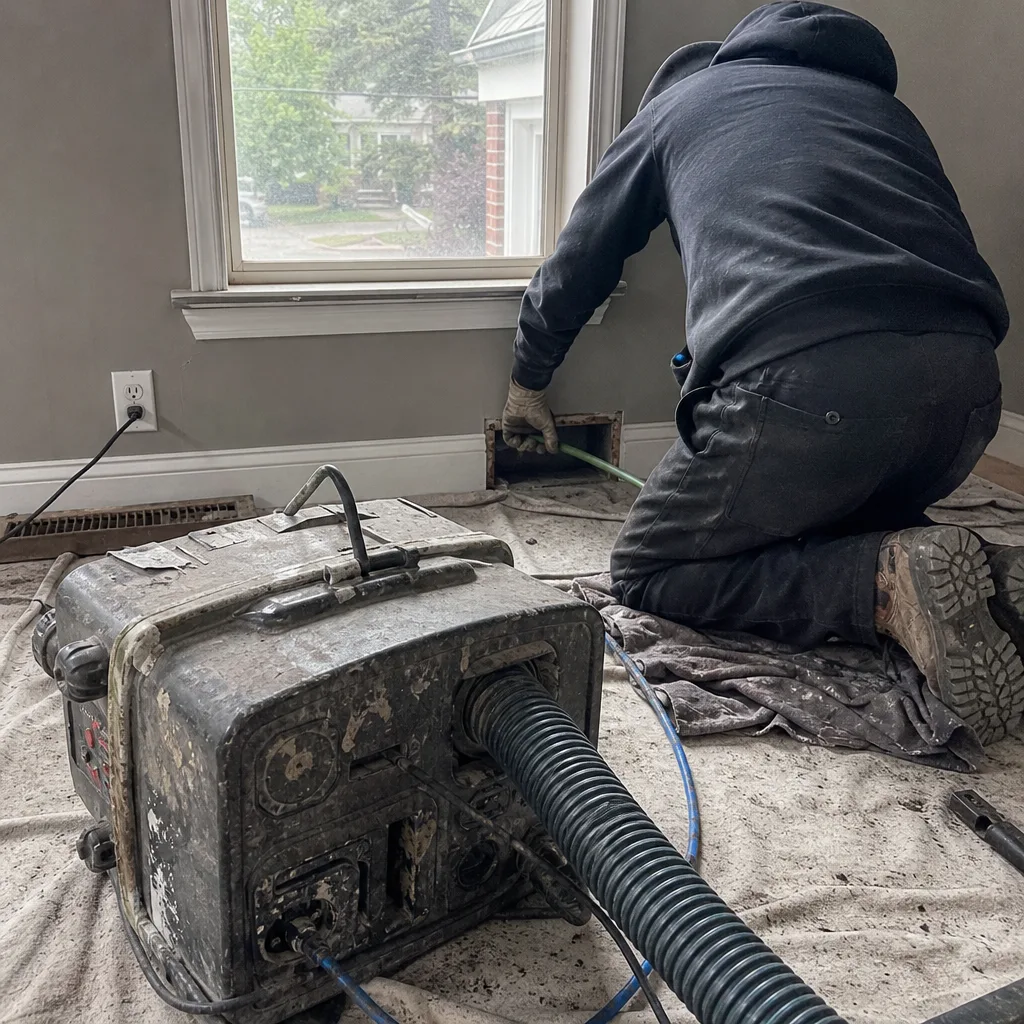 Before
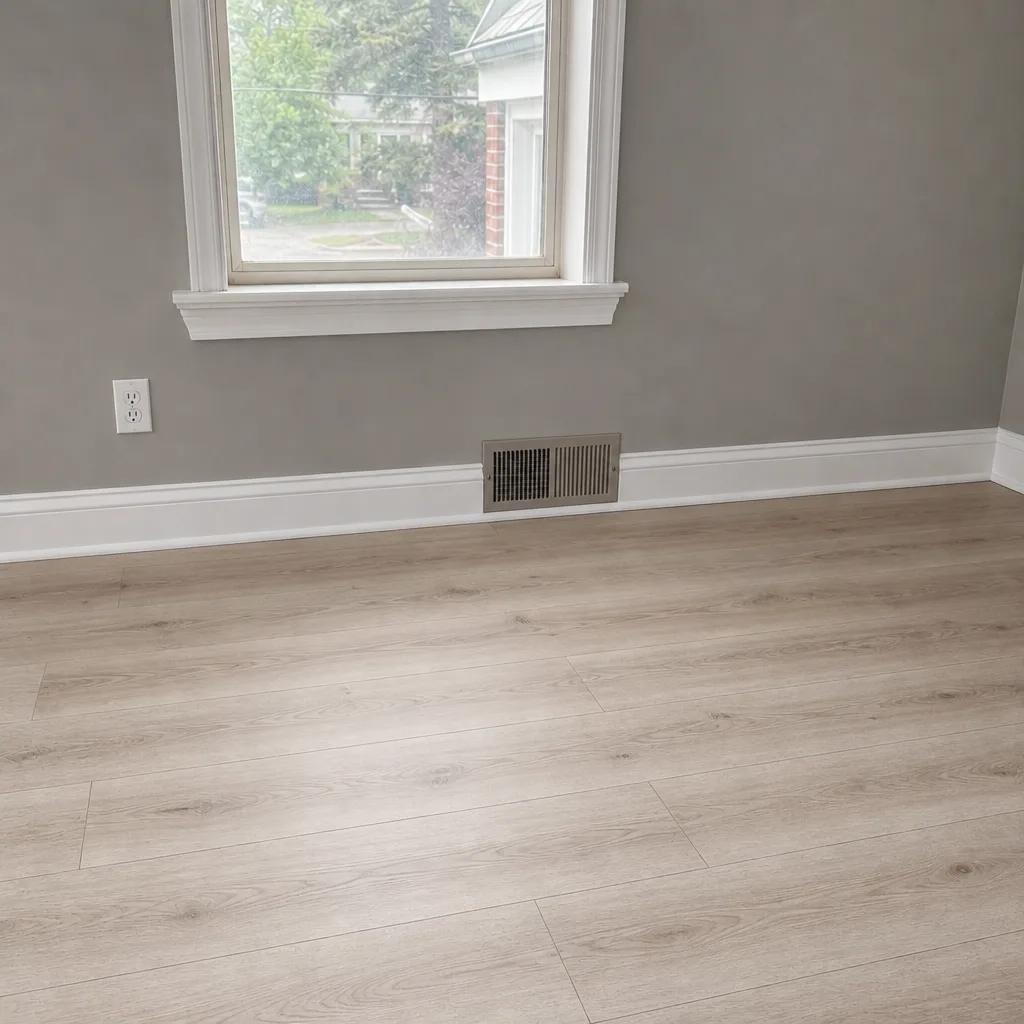 After
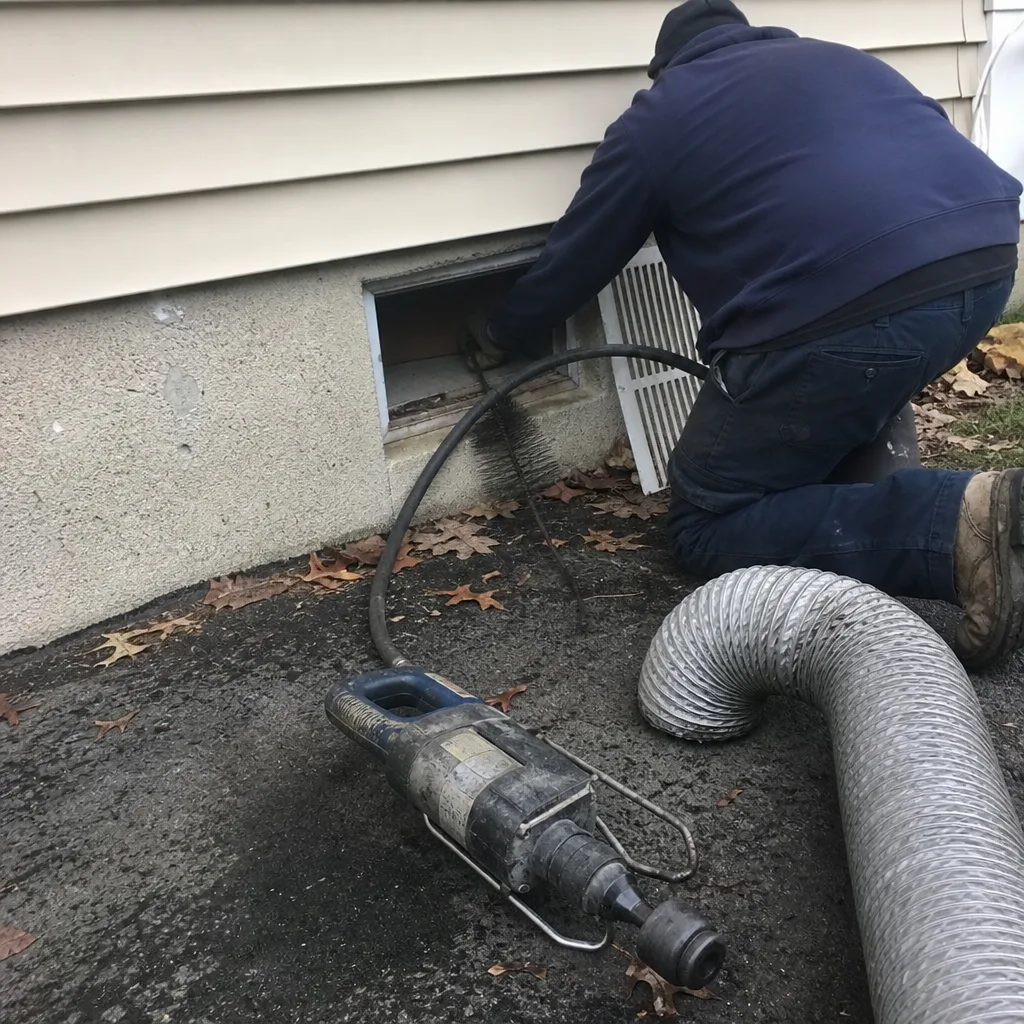 Before
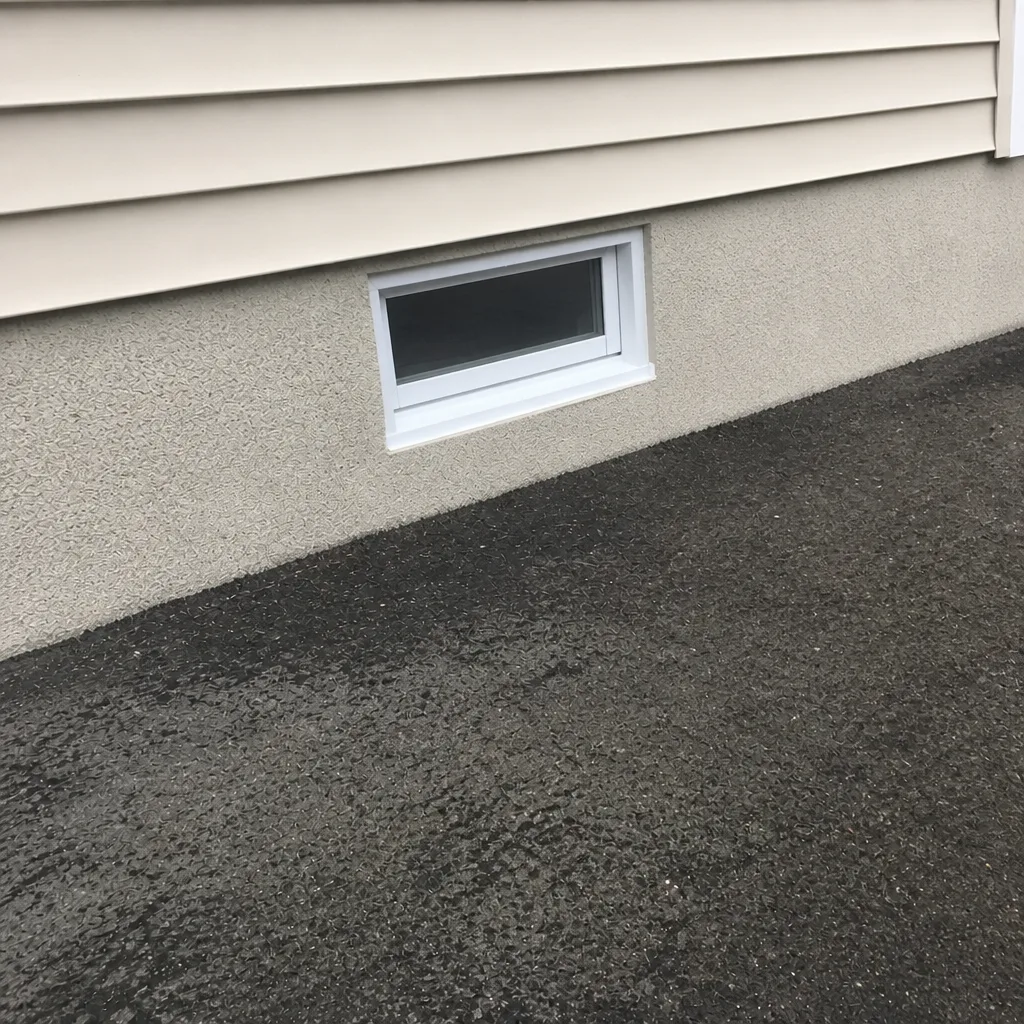 After
 Before
 After